Teaching the alphabet is one of the most important steps in early literacy instruction. It sets the foundation for decoding, spelling, and fluent reading. Yet many teachers and parents feel unsure about how to teach letters effectively—what order to use, whether to focus on letter names or sounds first, and how much practice is enough.
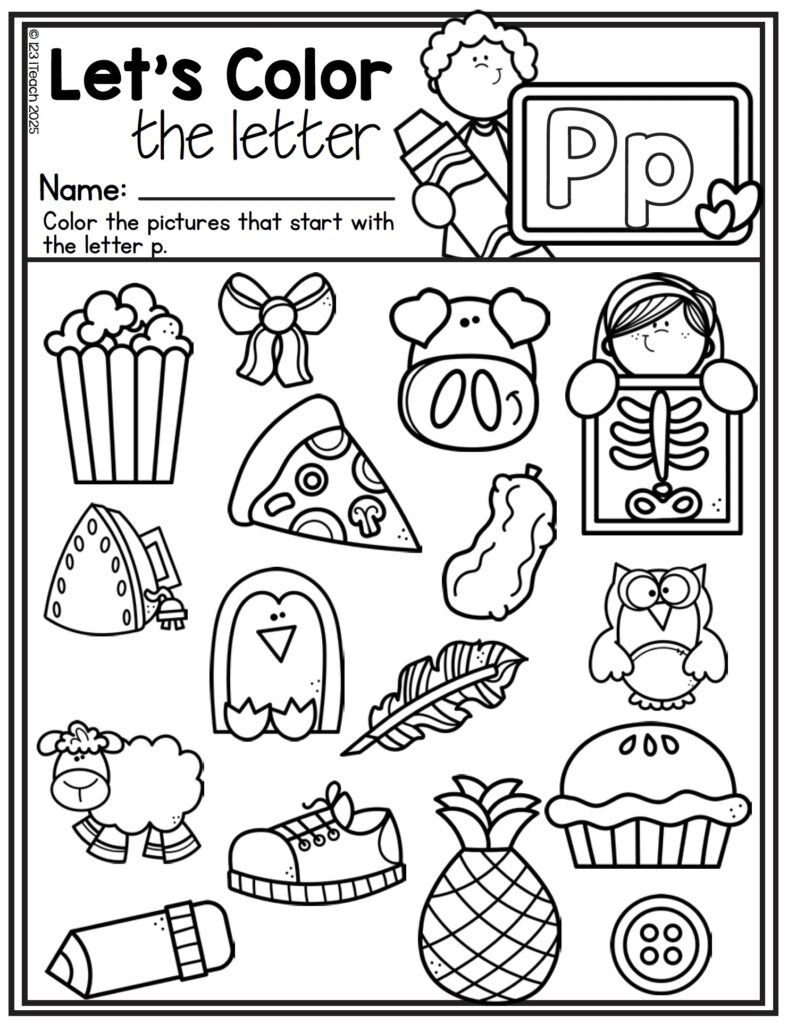
Let’s Color the Letter P
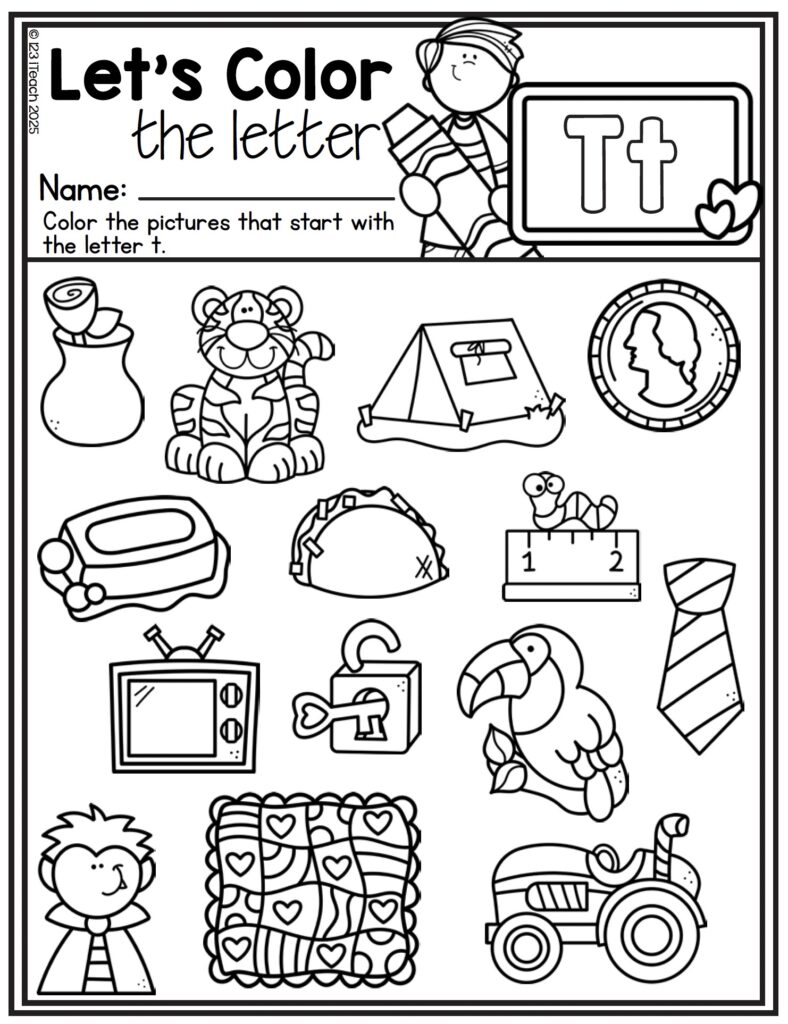
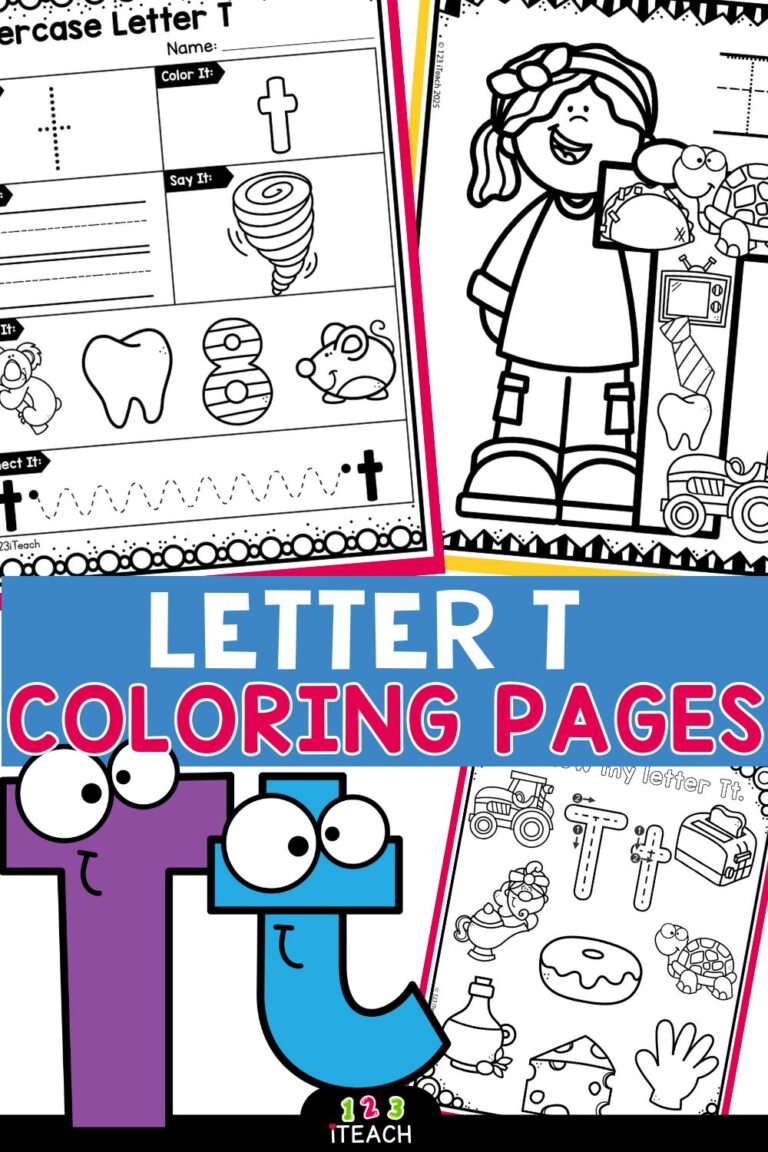
Let’s Color the Letter T
Research behind the Science of Reading is clear: children need explicit, systematic instruction in letter–sound relationships in order to become successful readers. Alphabet instruction works best when it is intentional, sound-based, and supported with meaningful practice opportunities throughout the week.
This post walks you through a 7-week Science of Reading–aligned alphabet curriculum, explains why the sequence matters, and shows how posters, centers, and worksheets work together to build strong early reading skills. You can also try Week 1 for free to see how the lessons fit into your daily routine.
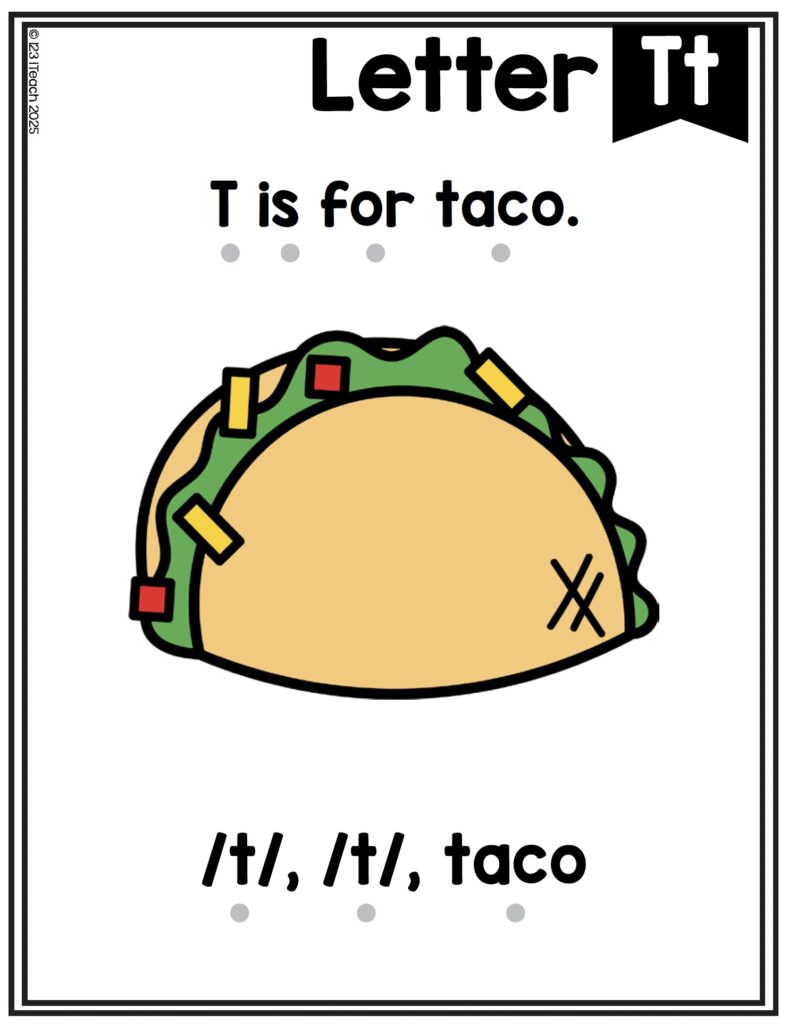
T is for Taco Alphabet Poster
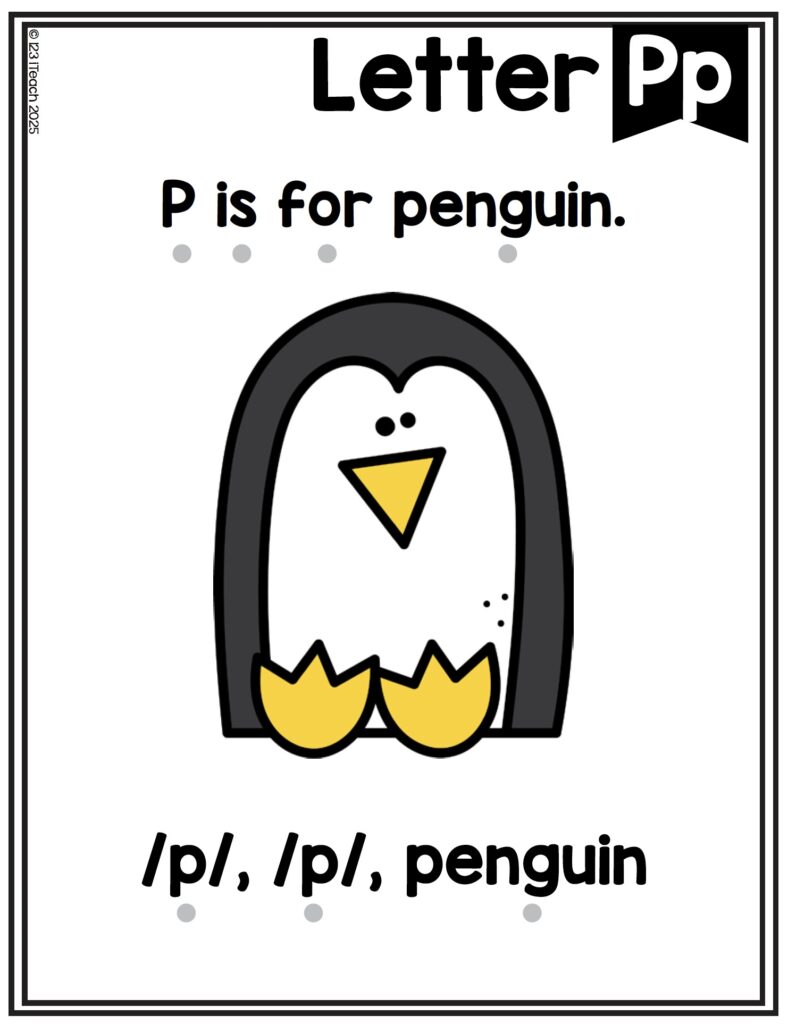
P is for Penguin Alphabet Poster
Why Alphabet Instruction Matters in Early Reading
Alphabet knowledge is more than recognizing letters on a page. It includes understanding that letters represent sounds and that those sounds can be blended together to read words. This understanding is called the alphabetic principle, and it is a critical predictor of future reading success.
According to Reading Rockets, systematic phonics instruction that explicitly teaches letter–sound relationships leads to stronger decoding skills than incidental or unstructured approaches. Children need direct instruction, repeated exposure, and opportunities to apply what they learn in meaningful ways.
When alphabet instruction is random or inconsistent, students may learn letter names without mastering the sounds they need to read. A structured, research-based approach helps prevent these gaps before they appear.
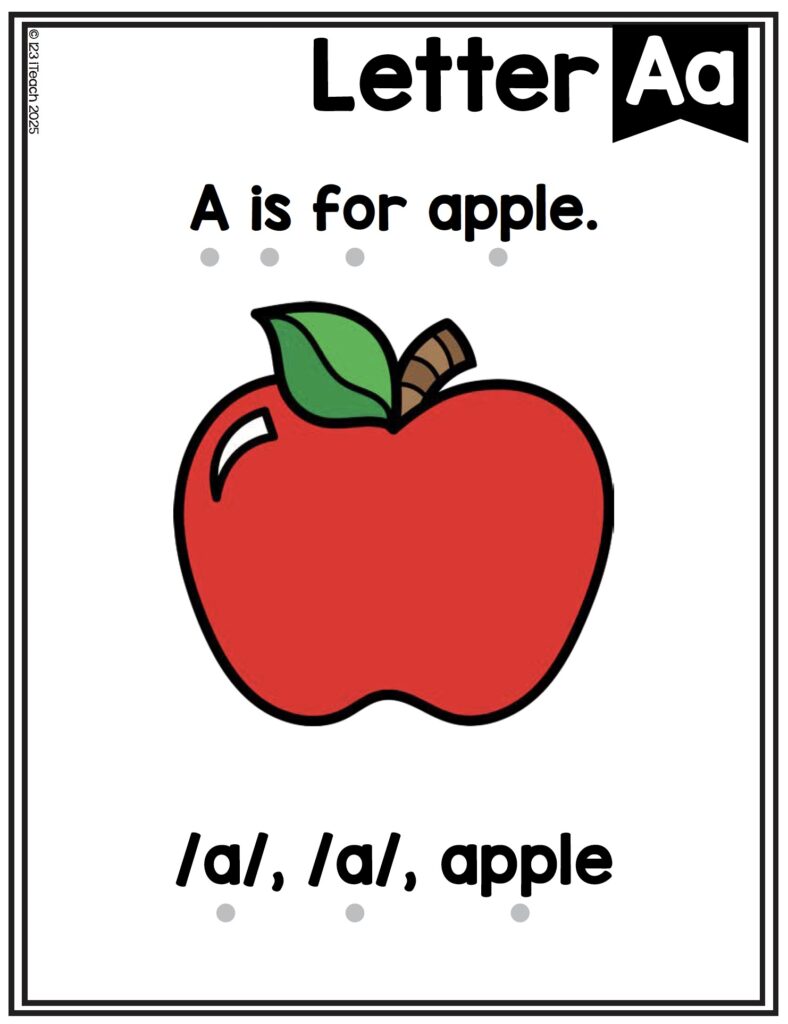
A is for Apple Alphabet Poster
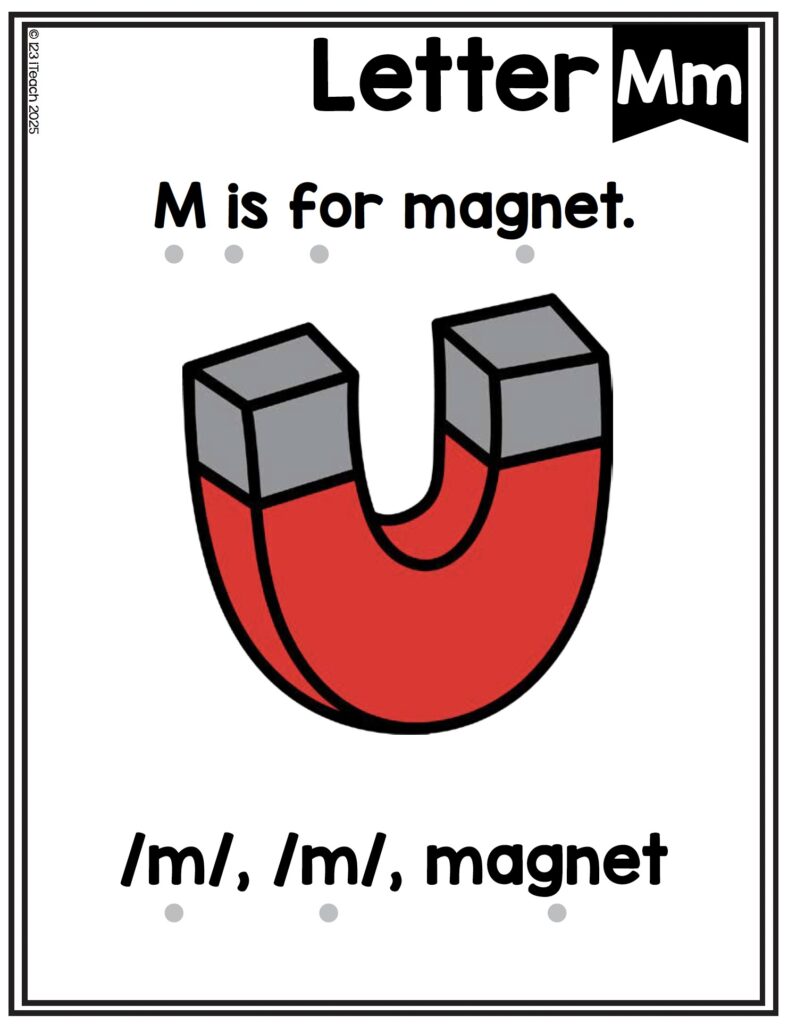
M is for Magnet Alphabet Poster
Why Letter Order and Pacing Matter
Teaching letters in alphabetical order is common, but it is not always effective. A Science of Reading approach prioritizes letter sounds that can be used quickly to build words. This allows students to begin blending and decoding early, which builds confidence and reinforces learning.
This curriculum uses a 7-week sequence that introduces letters in a way that supports early word reading and phonemic awareness development.
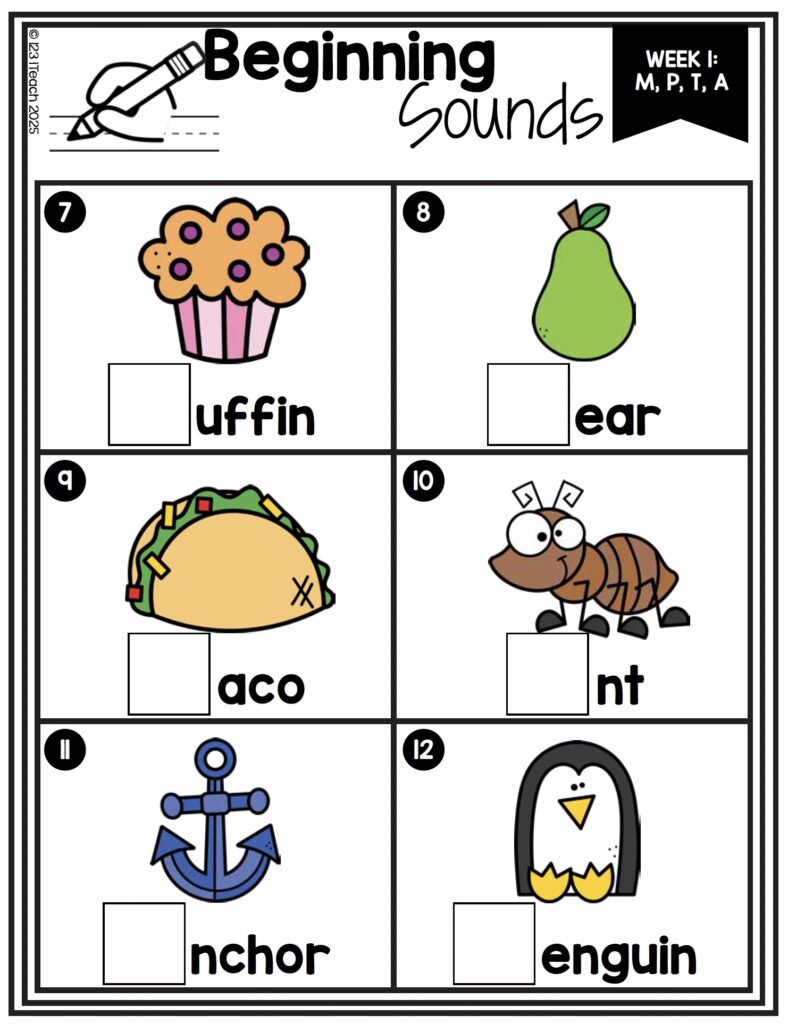
Write the Beginning Sounds M, P, T, A
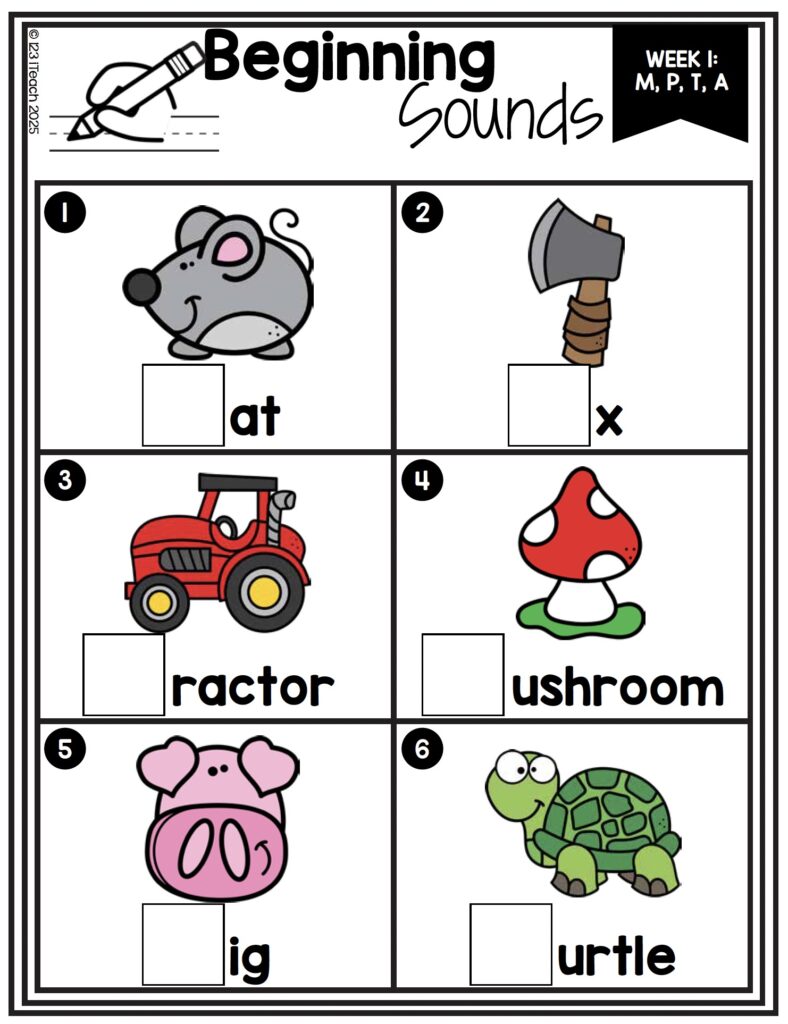
Write the Beginning Sounds Week 1
Alphabet Teaching Sequence
- Week 1: m, p, t, a
- Week 2: n, b, s, i
- Week 3: h, d, g, o
- Week 4: r, f, c, e
- Week 5: l, k, j, u
- Week 6: z, w, y
- Week 7: v, x, q
This sequence allows students to begin reading simple CVC words early in instruction, reinforcing the connection between sounds and print.
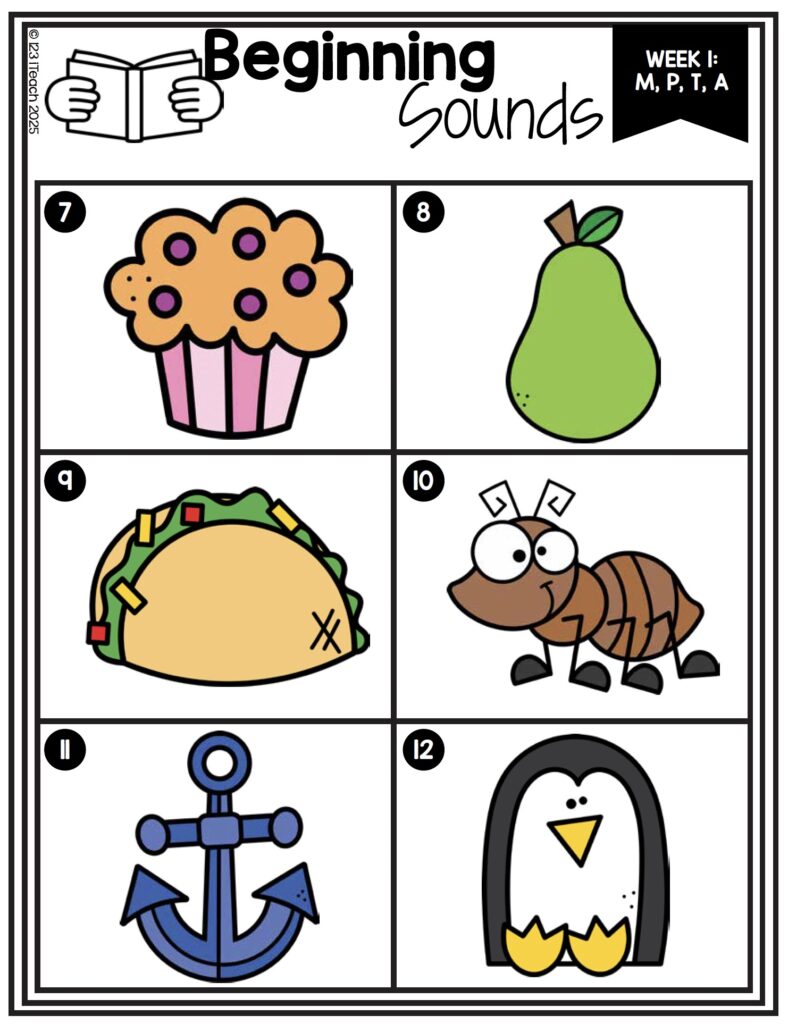
Beginning Sounds Center Week 1
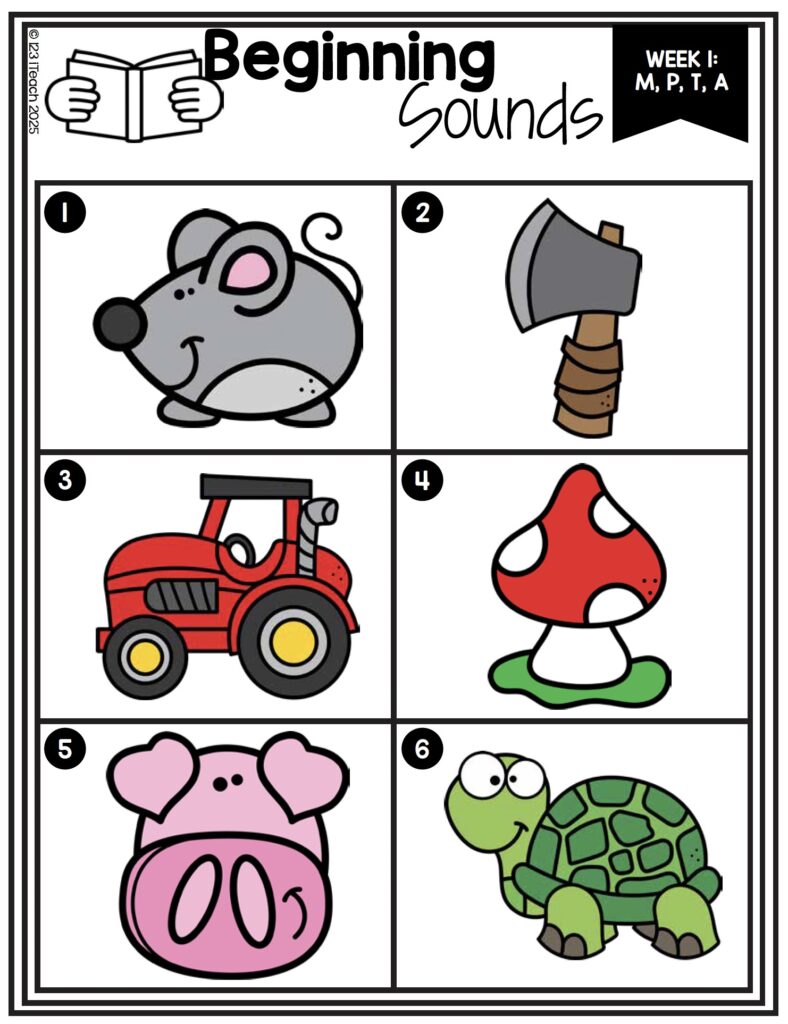
Beginning Sounds Center for M, P, T, A
What Is Included Each Week
Each week of instruction includes posters, centers, and worksheets designed to work together. This ensures students see and practice letters in multiple formats, which strengthens retention and understanding.
Alphabet Posters
Posters focus on one letter sound at a time and include a clear keyword image. These are used during whole-group instruction, posted on word walls, or added to literacy centers. Visual supports help students connect sounds to symbols and support memory.
Hands-On Centers
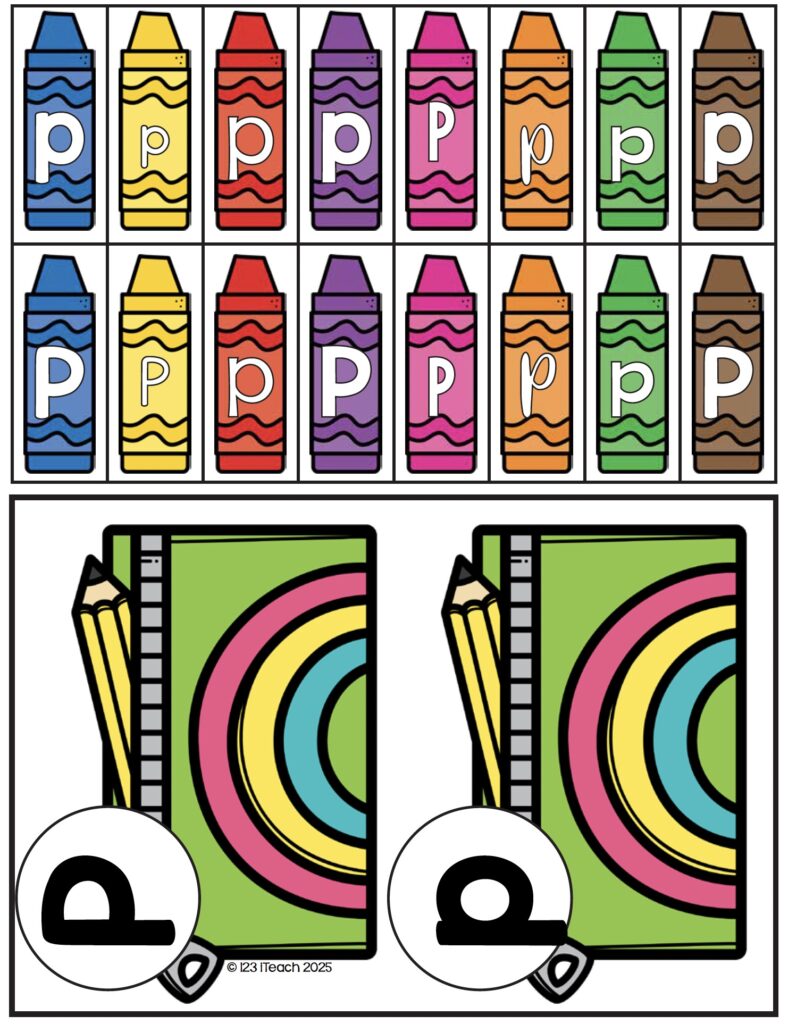
Sort the Letters for Letter P
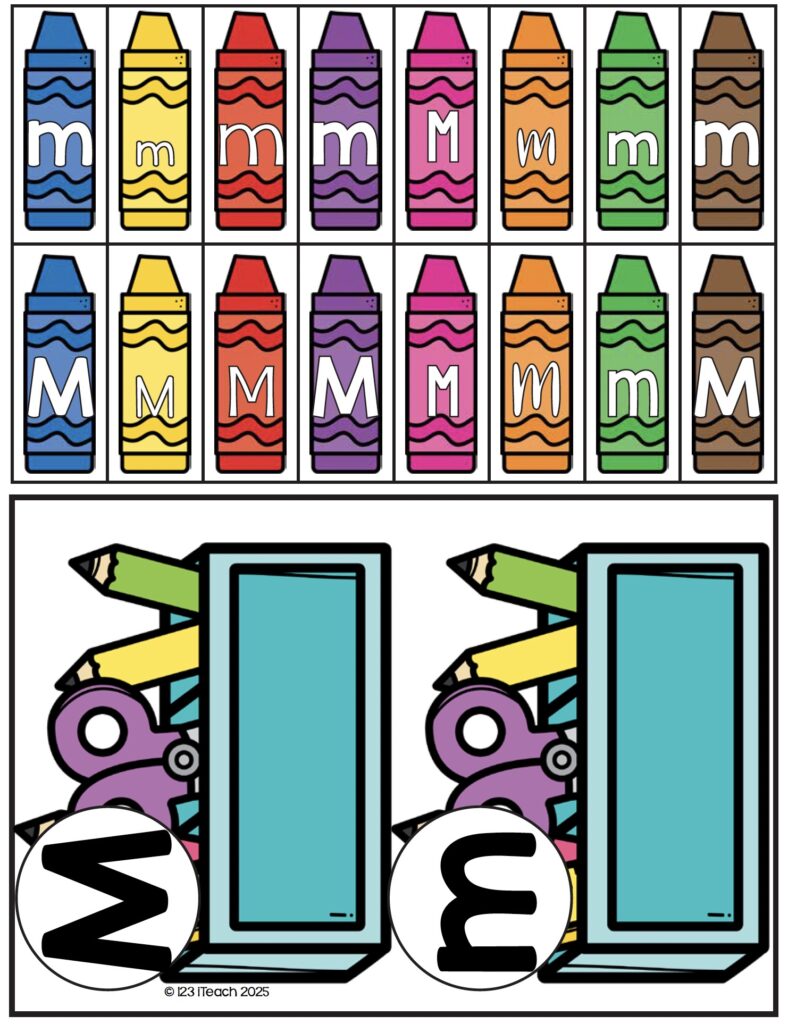
Sort the Letters for Letter M
Centers provide structured, independent practice and reinforce daily instruction. Activities focus on:
- Letter recognition (uppercase and lowercase)
- Beginning sound identification using picture cues
- Letter formation using multisensory tools
- Sound sorting and matching
Research supports the use of multisensory instruction to strengthen phoneme–grapheme connections, especially for early learners.
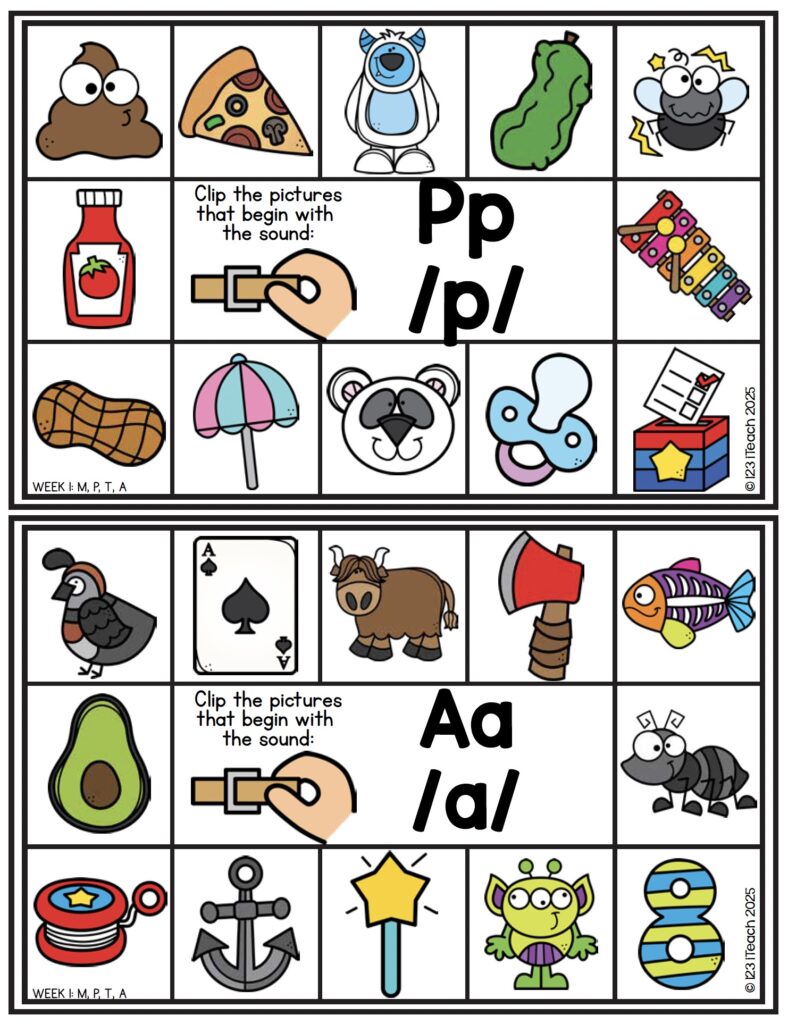
Clip the Beginning Sounds
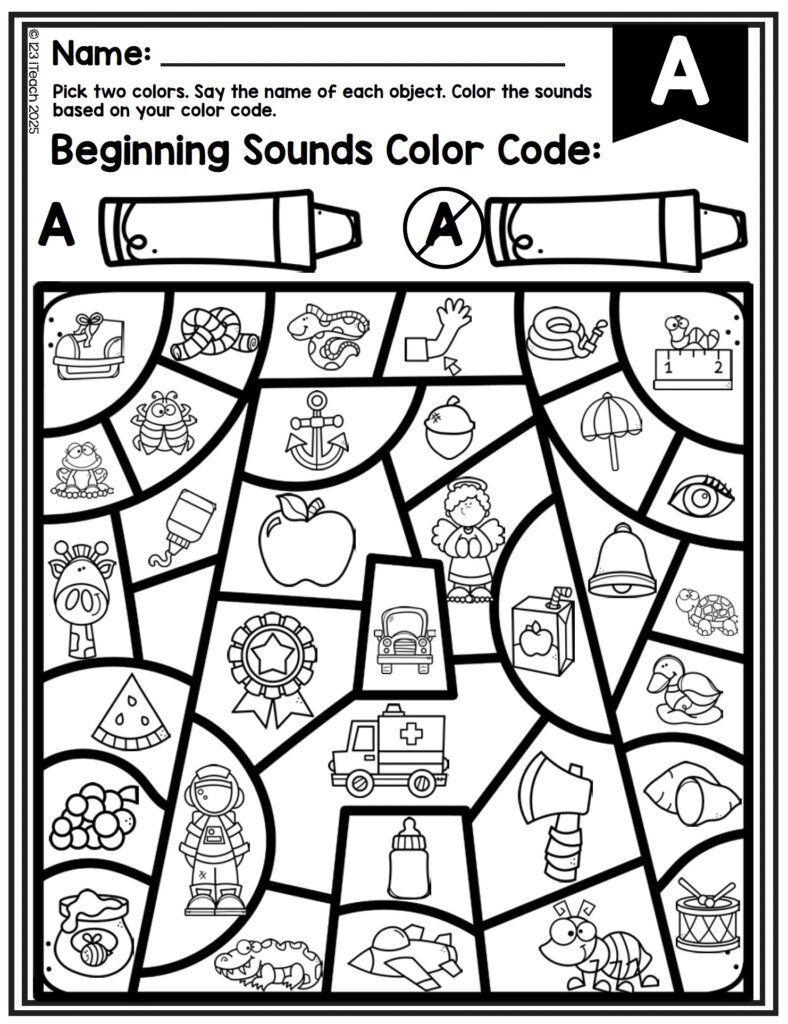
Beginning Sounds Color by Code A
Worksheets for Practice and Review
Worksheets are designed to be purposeful, not busywork. Students trace letters, identify beginning sounds, and apply skills they have already practiced during lessons and centers. These pages also serve as a simple way to monitor progress.
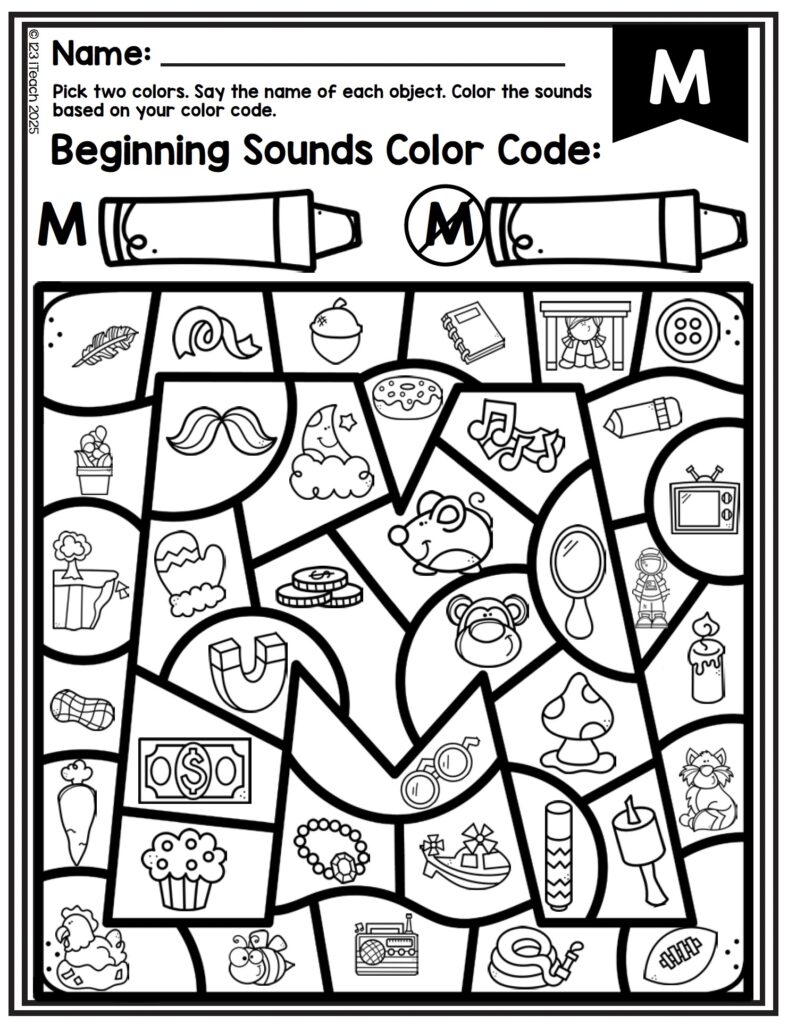
Beginning Sounds Color by Code M
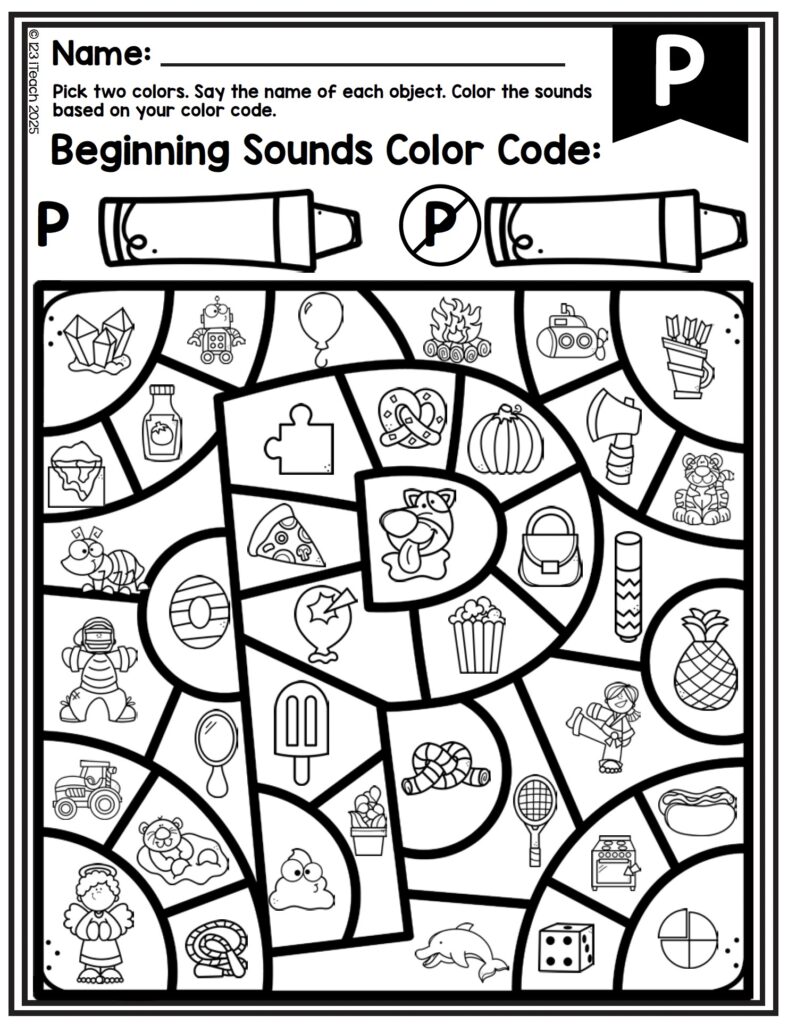
Beginning Sounds Color by Code P
A Closer Look at Week 1 (Free Sample)
Week 1 introduces the letters m, p, t, and a. These letters were chosen intentionally because they can be combined quickly to form simple words such as mat, tap, pat, and map.
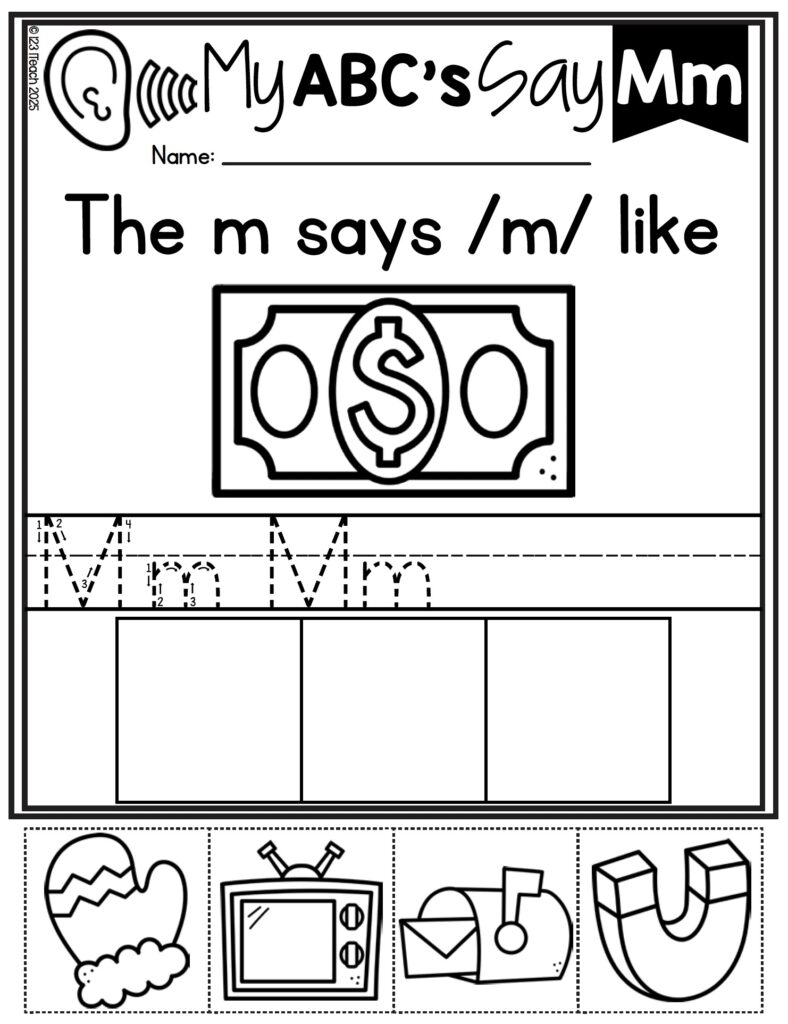
Cut and Paste Letter M Objects
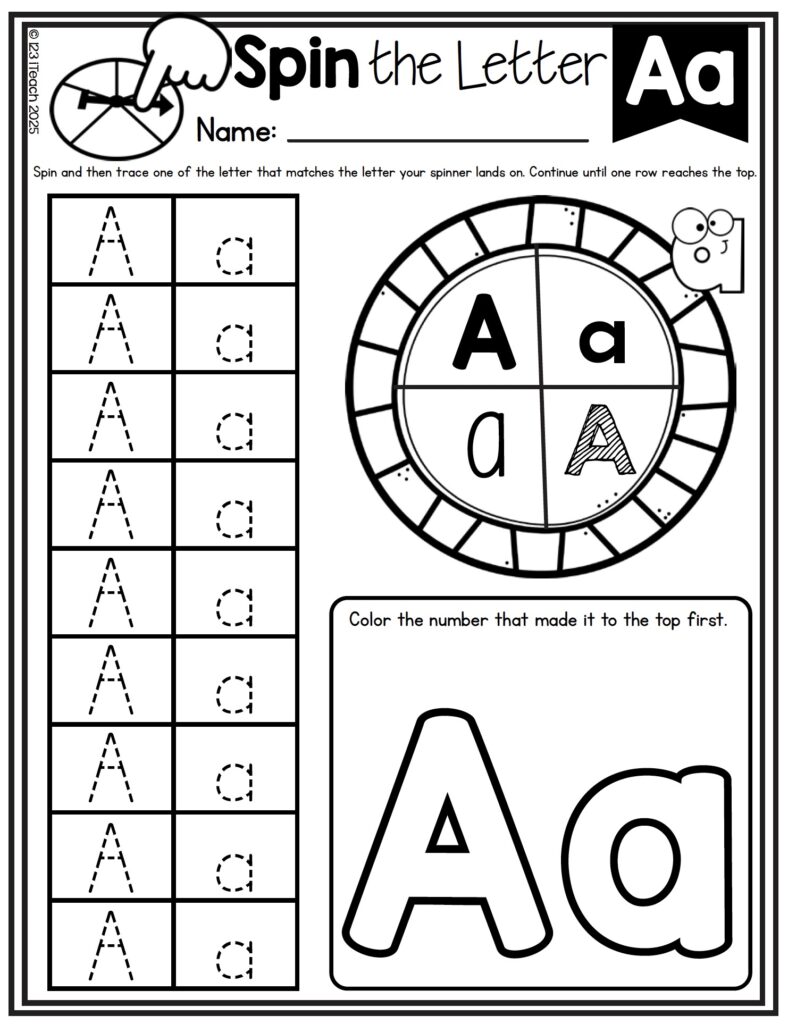
Spin and Write the Letter A
Whole-Group Instruction
Each letter is introduced with a consistent routine:
- Say the letter sound clearly.
- Identify the keyword image.
- Practice forming the letter using large motor movements.
- Review previously learned sounds.
Consistent routines help students feel secure and support long-term retention.
READY TO BUY? (to get the other 6 weeks, click this link).
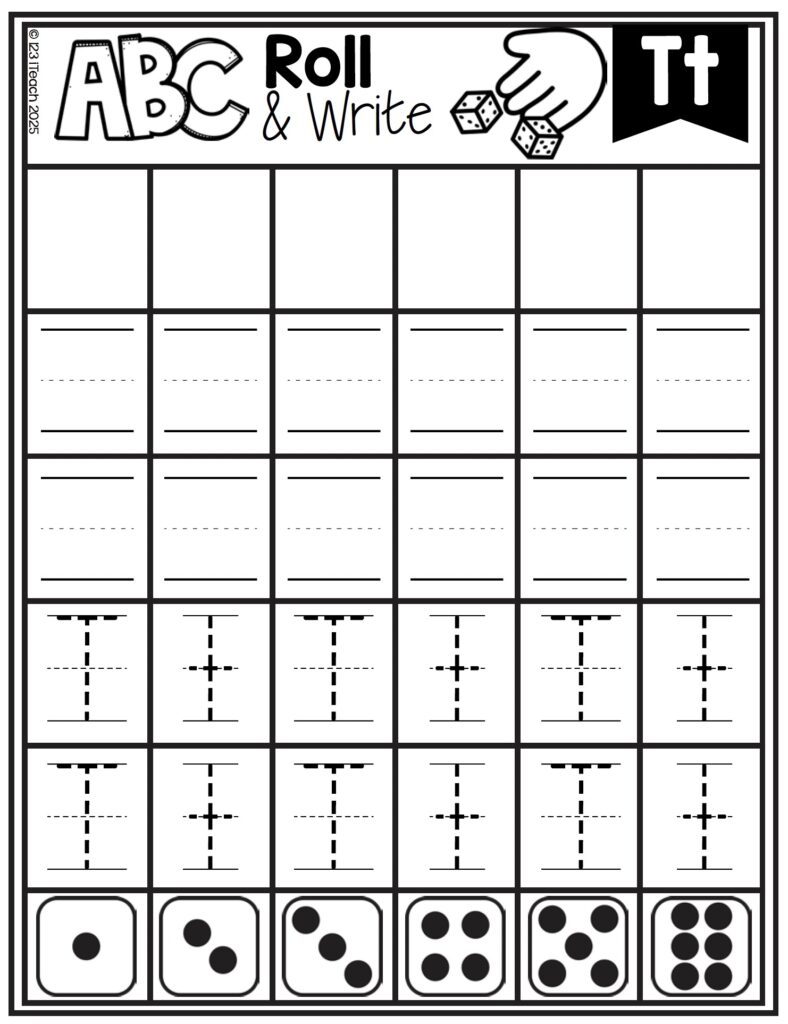
ABC Roll and Write Letter T
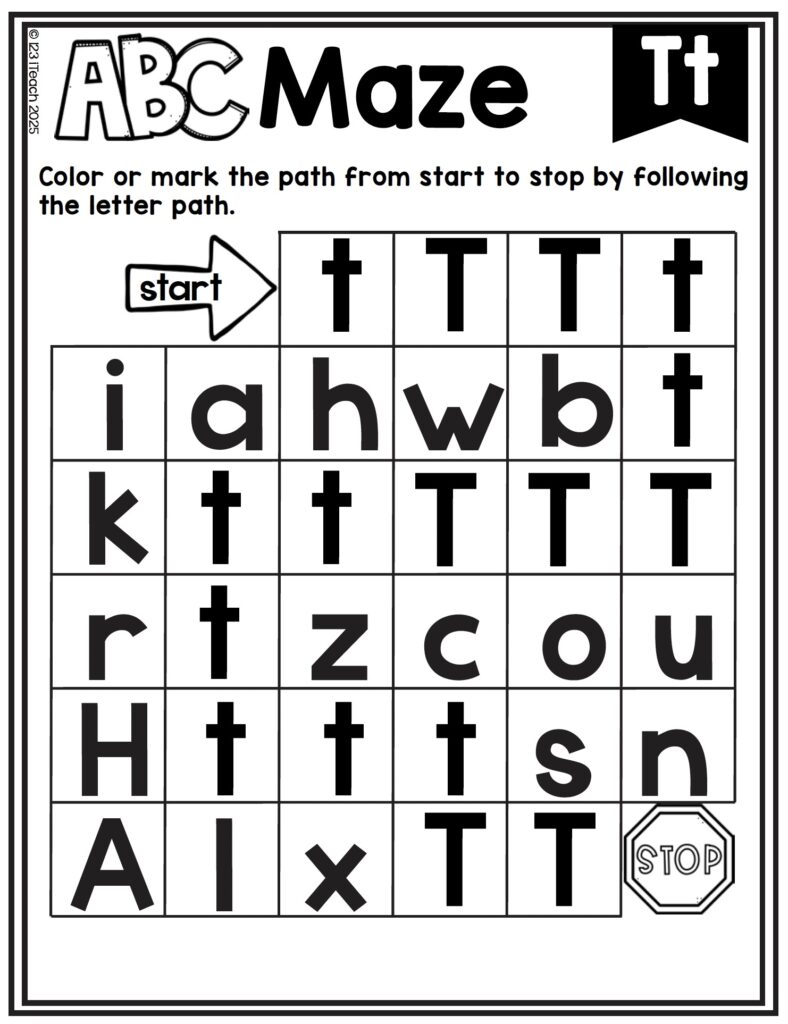
Letter T Alphabet Maze
Small-Group and Center Practice
Students rotate through centers that reinforce letter recognition, sound matching, and formation. Because pictures are included, students can work more independently, which is especially helpful in PreK and Kindergarten classrooms.
Independent Practice
Worksheets allow students to apply what they have learned in a quiet, focused setting. The activities are aligned directly to the week’s instruction so students are not asked to practice unfamiliar skills.
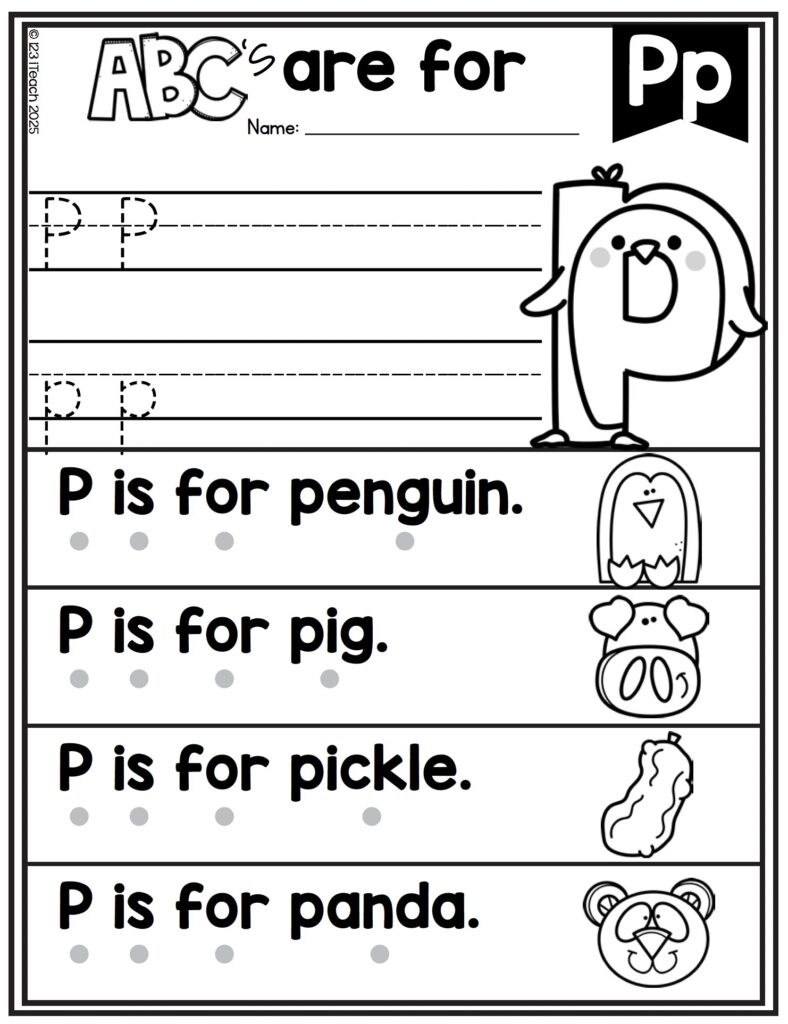
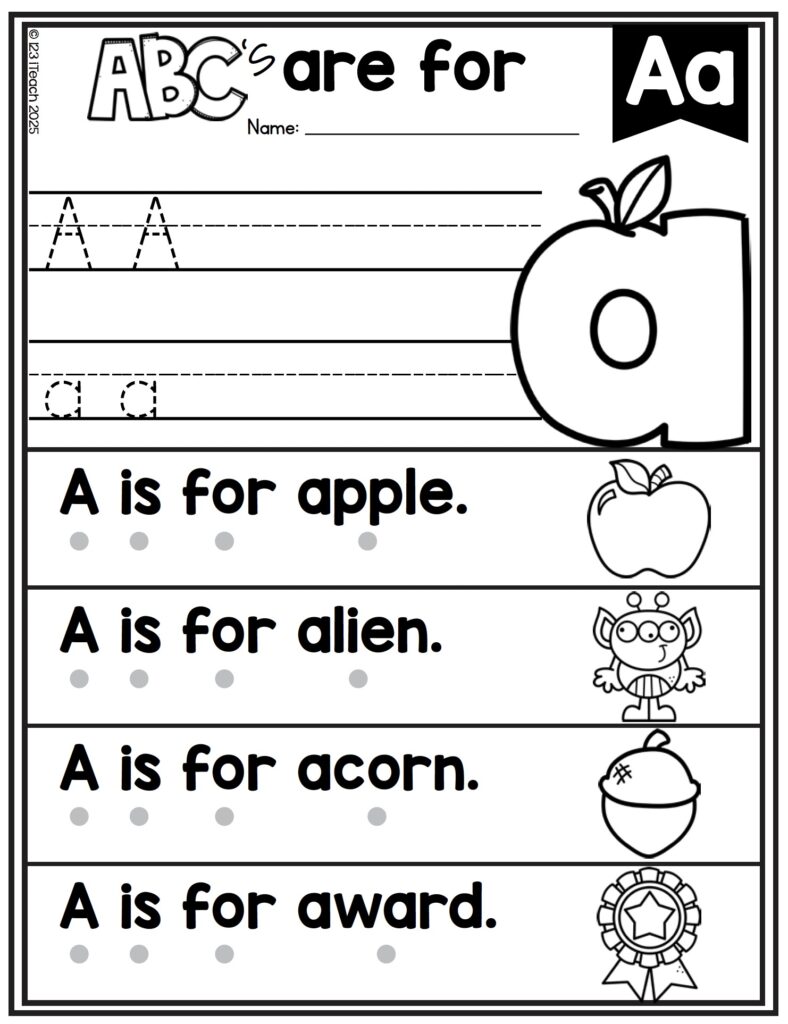
P is For, with Tracing Practice
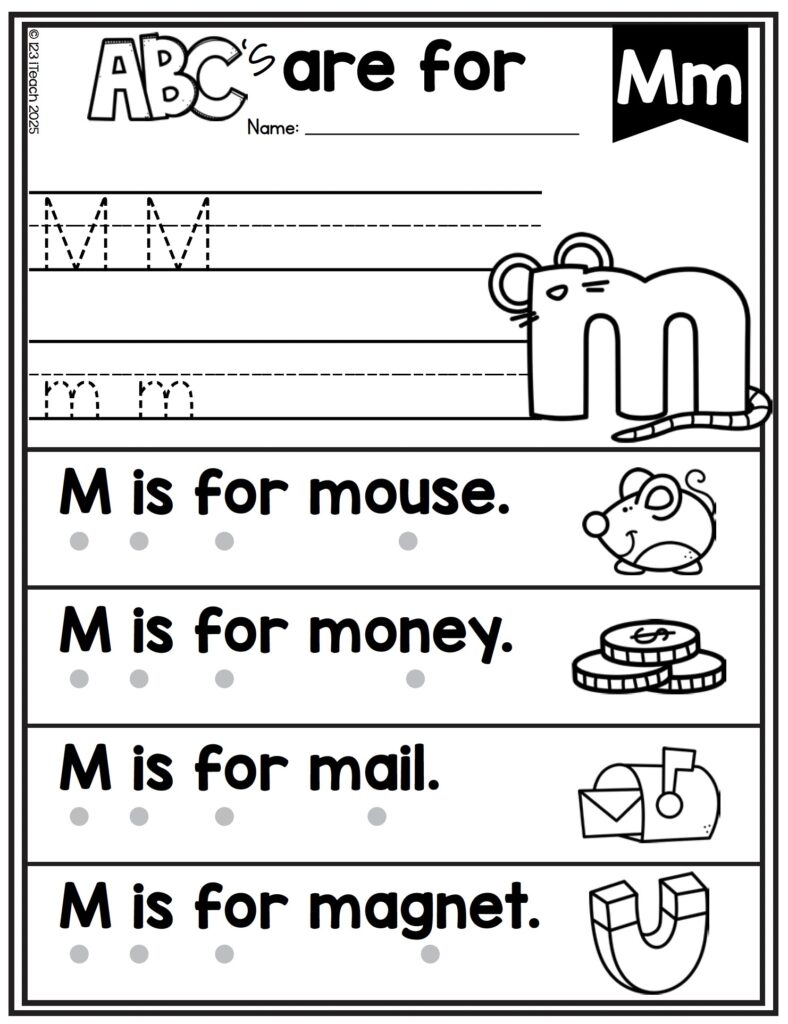
M is For, with Tracing Practice
How This Curriculum Aligns with the Science of Reading
The Science of Reading emphasizes five core components: phonemic awareness, phonics, fluency, vocabulary, and comprehension. Alphabet instruction sits at the intersection of phonemic awareness and phonics.
By teaching letter sounds explicitly and providing structured practice, this curriculum supports:
- Accurate sound identification
- Strong phoneme–grapheme mapping
- Early decoding and encoding skills
Improving Literacy notes that explicit instruction and cumulative review are essential for preventing reading difficulties before they begin.
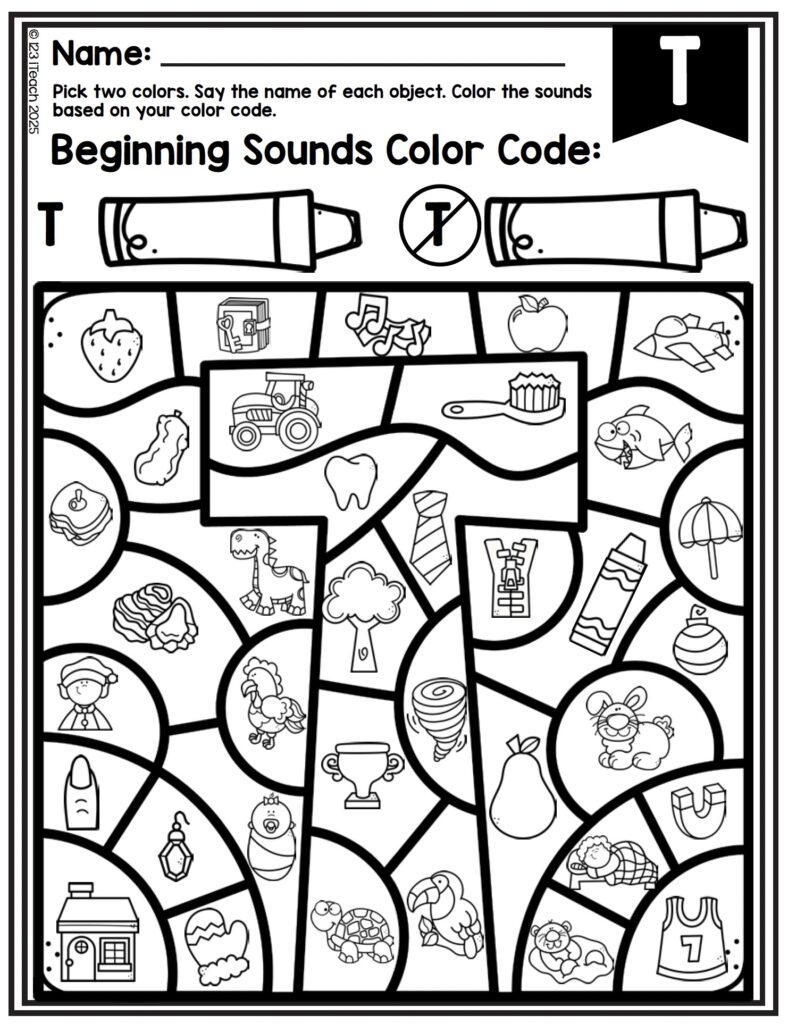
Color by Code: Letter T
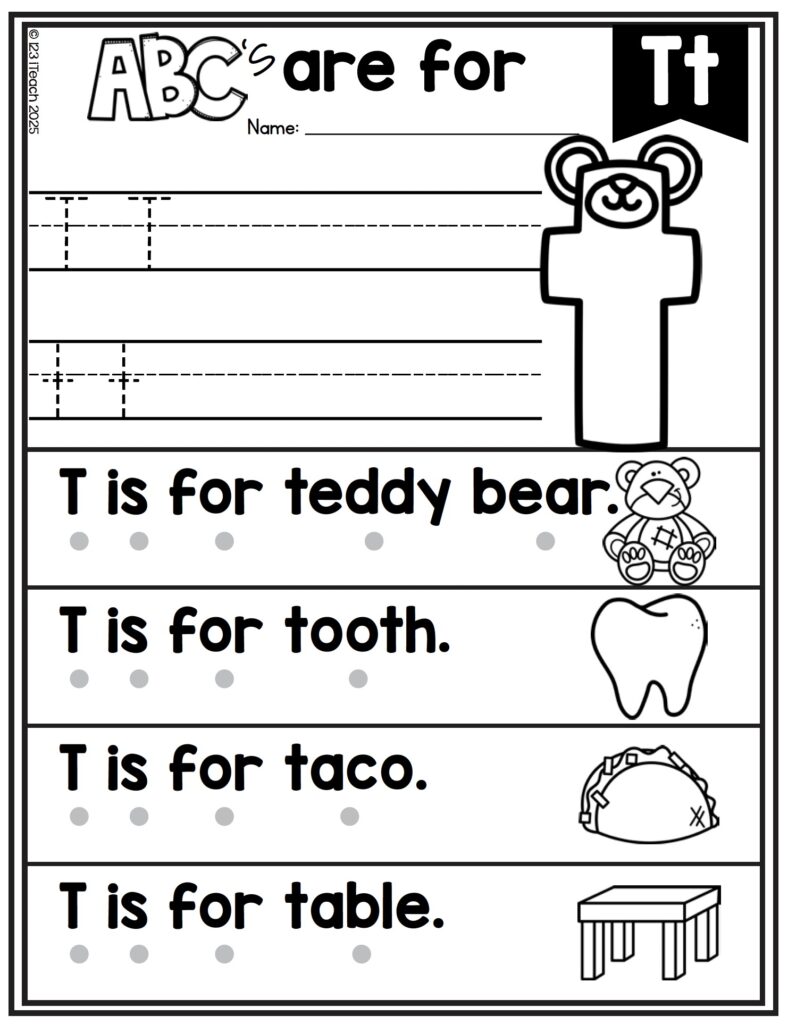
T is for Teddy Bear: Letter Tracing
Benefits for Teachers and Parents
This alphabet curriculum is designed to reduce planning time while increasing instructional clarity.
Teachers benefit from:
- Clear pacing and lesson order
- Ready-to-use materials
- Built-in differentiation through centers
- Consistent routines that support classroom management
Parents and homeschool families benefit from:
- Simple structure
- Clear expectations
- Materials that build skills progressively
- Confidence that instruction is research-based
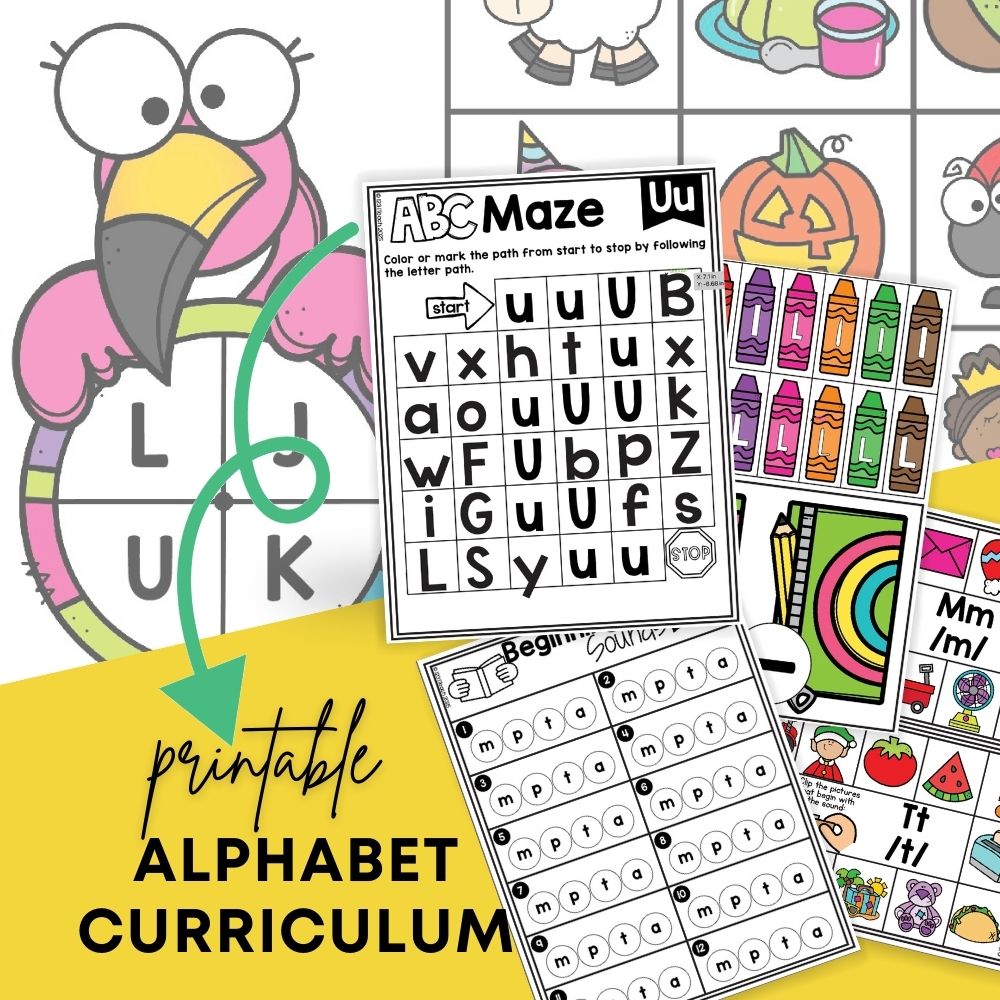
GET ALL 7-WEEKS
What Students Gain
By the end of the first week, students are able to:
- Identify letter sounds for m, p, t, and a
- Recognize and write the letters
- Begin blending sounds to read simple words
- Build confidence with early reading behaviors
These foundational skills support long-term reading success.
Try Week 1 for Free
If you want to see how this Science of Reading–aligned alphabet curriculum works in real classrooms, start with Week 1. You will receive posters, centers, and worksheets that follow the same structure used throughout the full 7-week sequence.
NOTE: Be sure and click each of the buttons below to get all the parts of the Week 1 Alphabet Curriculum