As you guide preschool and kindergarten learners through early math, one of your biggest goals is to help them see numbers — not just as scribbles on a page, but as real quantities with meaning. That’s where number-recognition puzzles that pair ten-frames with written numerals shine. A ten-frame is a simple two-row, five-column grid that helps children visualize numbers up to 10 — showing “how many” without counting one-by-one.
When children match a ten-frame filled with counters (or dots) to the written number on a puzzle piece, they’re building foundational skills in subitizing (quickly recognizing small quantities), one-to-one correspondence, and the connection between quantity and numeral.
Early number sense doesn’t just matter for kindergarten or first grade — research shows strong number-sense in pre-K and kindergarten predicts better math outcomes as children progress.
What the “Number Recognition Puzzle Strips” Center Looks Like
- A printable PDF with 10 strips, one for each number 1–10.
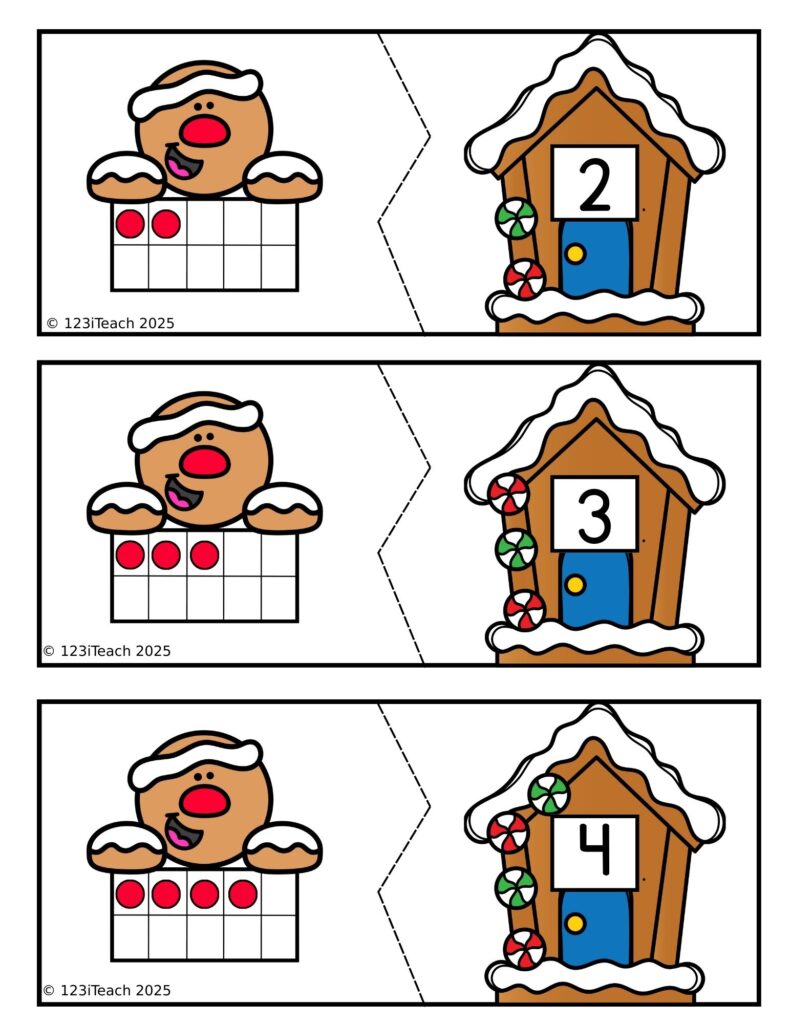
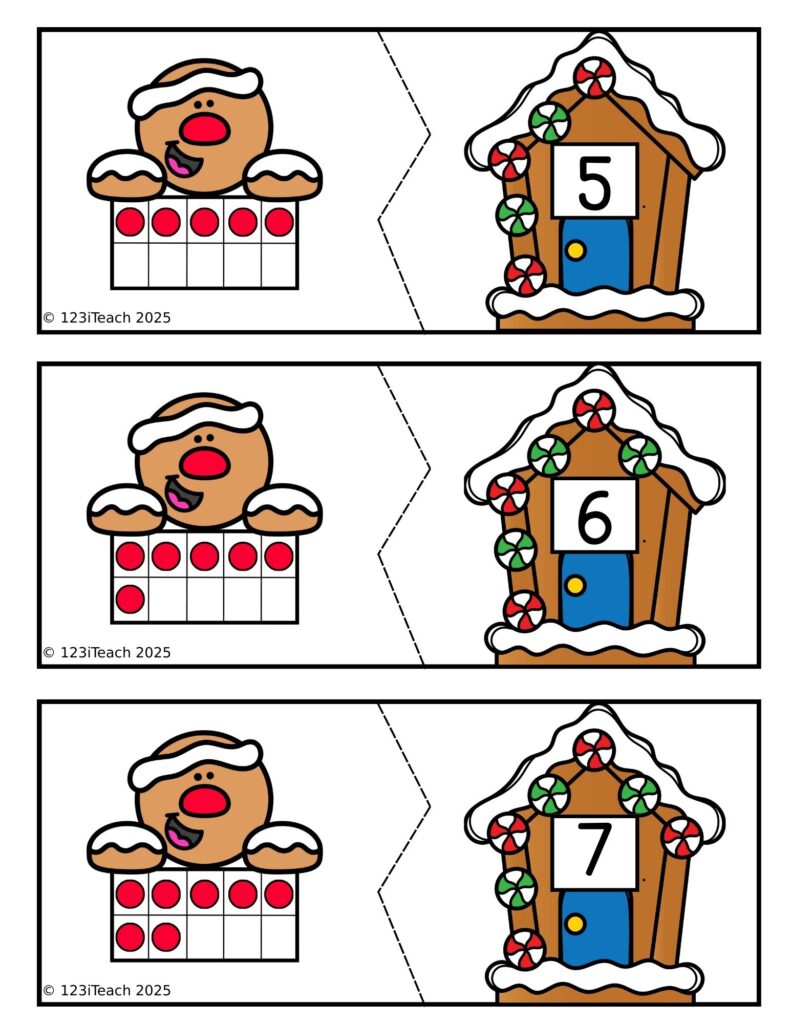
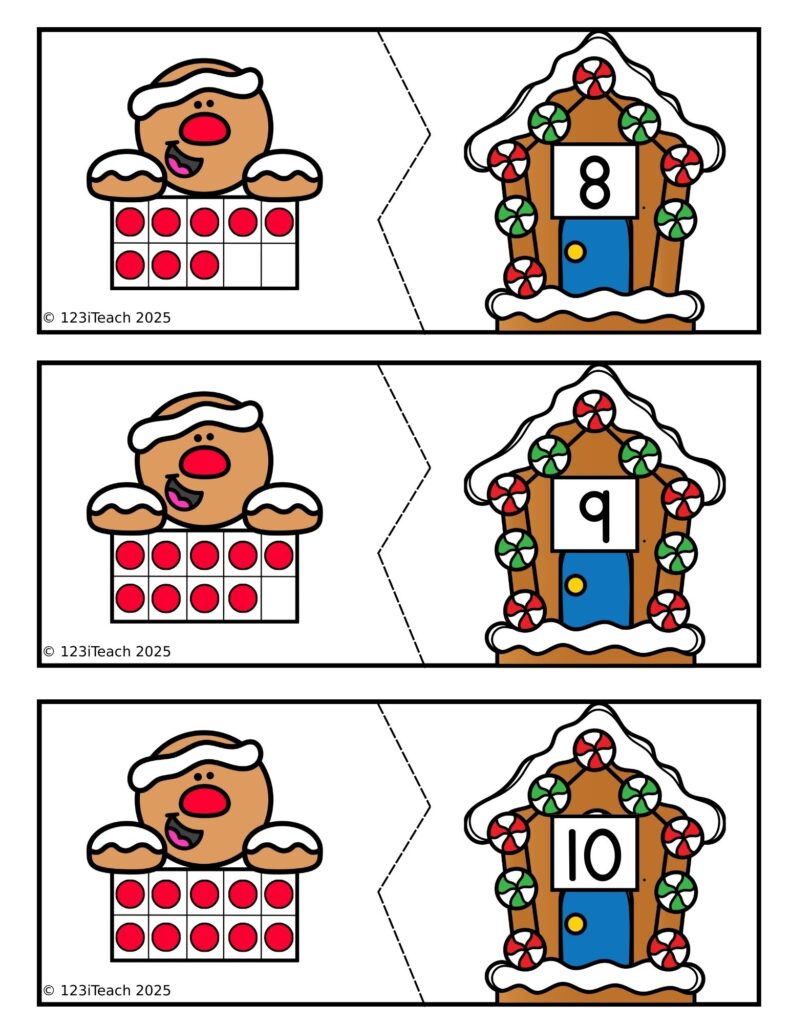
- Each strip shows a ten-frame representation on one half and the typed numeral (e.g., “7”) on the other half — separated by a zig-zag/puzzle line.
- You cut the strips apart, then cut along the puzzle line to create matching pairs: ten-frame piece + numeral piece.
- Kids match the two halves to make a “puzzle.”
- Laminating the pieces (optional) turns this into a reusable, low-prep math center.
This takes about 5–10 minutes prep time — perfect for busy teachers and homeschool parents looking to build meaningful math experiences with minimal fuss.
Why These Centers Work — Especially for Pre-K & Kindergarten
Visual + symbolic matching builds strong number sense. With ten-frames, children don’t just memorize numerals — they connect numerals to quantities. That understanding supports skills like subitizing, number relationships, and flexible thinking about numbers.
Hands-on matching and “puzzle-making” is engaging and meaningful. Manipulatives — or in this case, tangible puzzle pieces — support children who learn best with hands-on, concrete materials. That aligns with a proven approach in early math instruction: concrete → representational → abstract (CRA).
Perfect for differentiation and repetition. For kids just learning 1–5, you can start with only those numbers. For students ready to challenge, use all 1–10. You can also mix up ten-frame colors, add counters, or time matching to add variety.
How to Use the Center in Your Classroom or Homeschool
- Introduce the ten-frame concept. Show a blank ten-frame. Demonstrate filling it with counters to show different numbers. Practice “reading” the quantity (e.g., “five is five dots. Eight is five and three more.”).
- Model the puzzle matching. Show one strip cut in half. Mix up numeral side and ten-frame side. Invite a child to match them. Talk about how the ten-frame “matches” the number.
- Let children work independently or in small groups. They can match 1–10, or you can start with 1–5 to build confidence. Offer help with tricky matches.
- Use as a quick warm-up or math center. Great for 5–10 minute bursts during circle time, math block, or independent practice.
- Extend when ready. Once children are fluent, have them practice “writing the number word” (e.g., “seven”) beside the numeral. Or ask questions like, “Which ten-frame shows one more than 6?” or “Which shows two less than 10?”
Quick Tips for Smooth Center Prep
- Print on cardstock or laminate the strips so they’ll last.
- Use fun counters (buttons, mini erasers, colored chips) if you want a tactile, reusable option.
- Store pieces in small zip-top bags or index card boxes to keep them sorted and easy for kids to access.
- Use different color sets (e.g., yellow numerals, blue ten-frames) to help little ones match more easily.
- Rotate puzzles: sometimes use numeral-to-ten-frame matching, sometimes use ten-frame-to-numeral, sometimes both — to build flexible thinking.
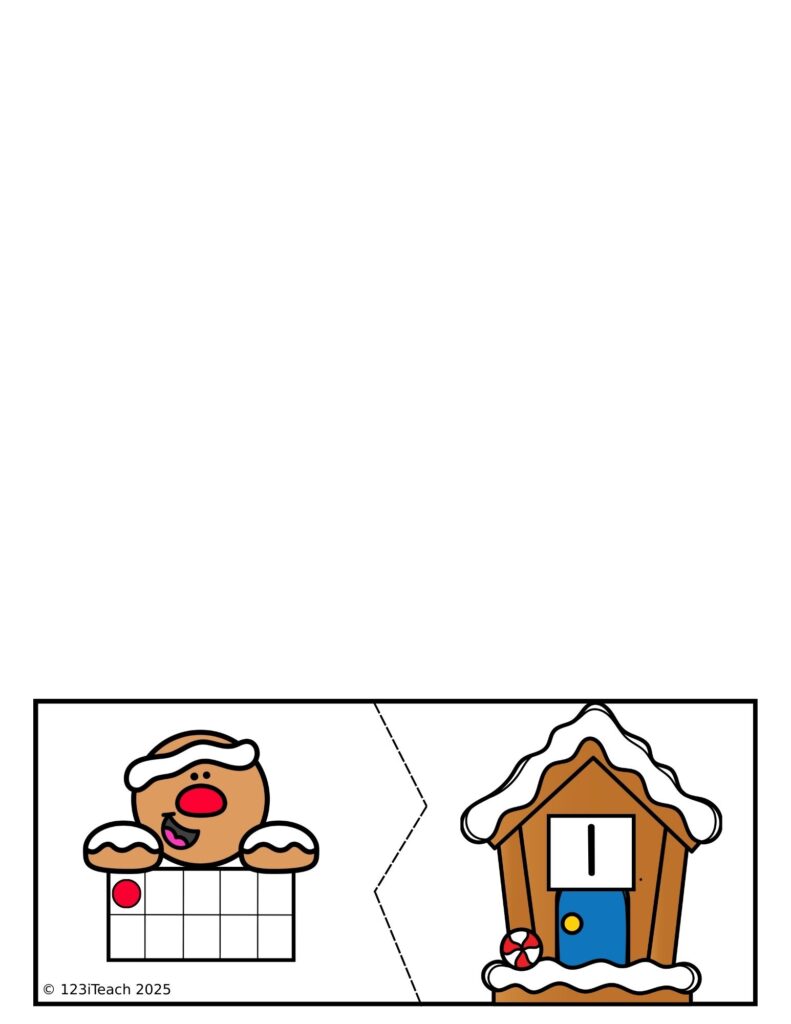
Gingerbread Number Card 1
Gingerbread Number Card 2
Gingerbread Number Card 3
Gingerbread Number Card 4
Why This Simple Center Can Make a Big Difference
A little concrete practice now pays off big later. When children get comfortable matching quantities to numerals through hands-on puzzles like this, they build a strong foundation of number sense. That makes first-grade math — addition, subtraction, number bonds — far easier and more intuitive.
The 123 iTeach Shop
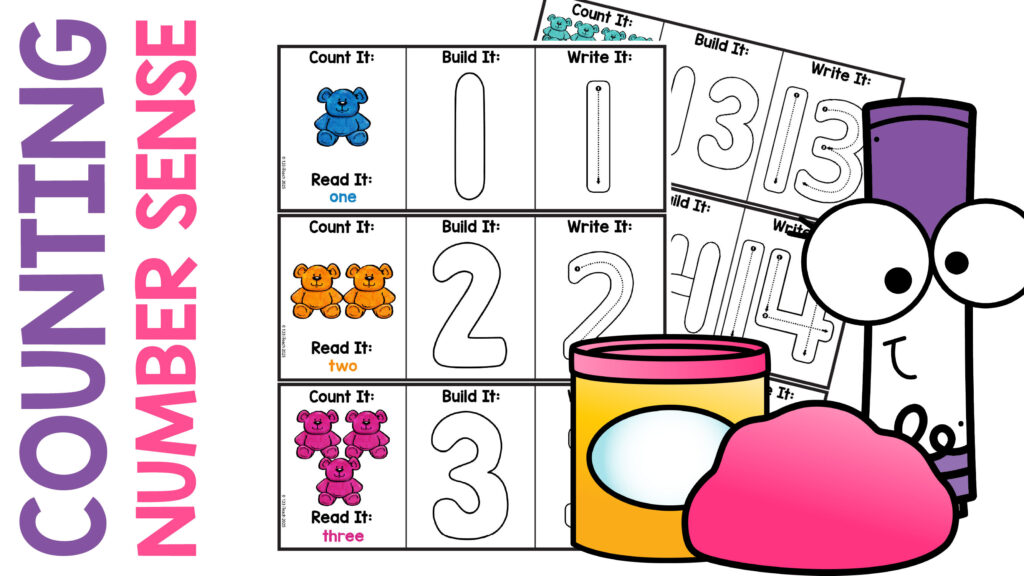
If you love centers that are quick to prep and easy for students to use independently, there are more just like this inside the shop. You’ll find hands-on math, phonics, and literacy centers designed for real classrooms and tight schedules. They’re organized, ready to print, and created to save you time—so you can spend less energy hunting for activities and more time teaching and connecting with your kids.
Want even more Pre-K to 1st Grade Resources?
(there are worksheets, coloring pages, Google Slide activities, centers and more!).