Handwriting practice is more than learning how to form letters neatly. It strengthens fine motor skills, reinforces literacy, and helps learners connect language with memory. Practicing the days of the week is one of the easiest and most effective ways to build consistent handwriting habits.
The days of the week are familiar, repetitive, and meaningful. Because learners already recognize the words, they can focus on letter formation, spacing, and rhythm instead of decoding new vocabulary. This makes days of the week handwriting practice ideal for early learners, struggling writers, and even adults rebuilding handwriting skills.
Why Use the Days of the Week for Handwriting Practice
Days of the week handwriting practice works because it blends structure with repetition. Each word appears regularly in daily life, which reinforces retention through real-world use. This repetition helps learners develop muscle memory without boredom.
Another advantage is predictability. Learners know the sequence—Monday through Sunday—which reduces cognitive load. That mental space can then be used to focus on posture, pencil grip, and consistent letter sizing.
Teachers and parents also benefit from this approach. It fits naturally into morning routines, journals, planners, and calendars. A short daily handwriting warm-up using the current day can take less than five minutes and still deliver meaningful results.
Cognitive and Motor Benefits of Handwriting Practice
Research consistently shows that handwriting activates areas of the brain linked to memory and comprehension. Writing words by hand improves recall more effectively than typing the same words. Practicing days of the week supports both language development and executive functioning.
Fine motor skills are strengthened through repeated letter strokes. Writing words like “Wednesday” or “Thursday” challenges coordination, spacing, and endurance. Over time, these small challenges improve control and fluency.
Handwriting also supports spelling and sequencing skills. Because the days of the week follow a fixed order, learners practice both correct spelling and logical progression. This is especially helpful for early elementary students and neurodivergent learners.
Best Ages and Skill Levels for Days of the Week Handwriting Practice
Preschool and kindergarten learners benefit from tracing and guided letter formation. At this stage, handwriting practice should focus on correct strokes rather than speed. Days of the week provide a consistent set of words that grow familiar quickly.
Elementary students can move from tracing to independent writing. Writing the full day name each morning helps reinforce capitalization and spacing. This practice also supports calendar skills and time awareness.
Older students and adults may use days of the week handwriting practice for remediation or journaling. Cursive practice, calligraphy drills, or planner-based writing are all effective options. Familiar words reduce frustration while refining technique.
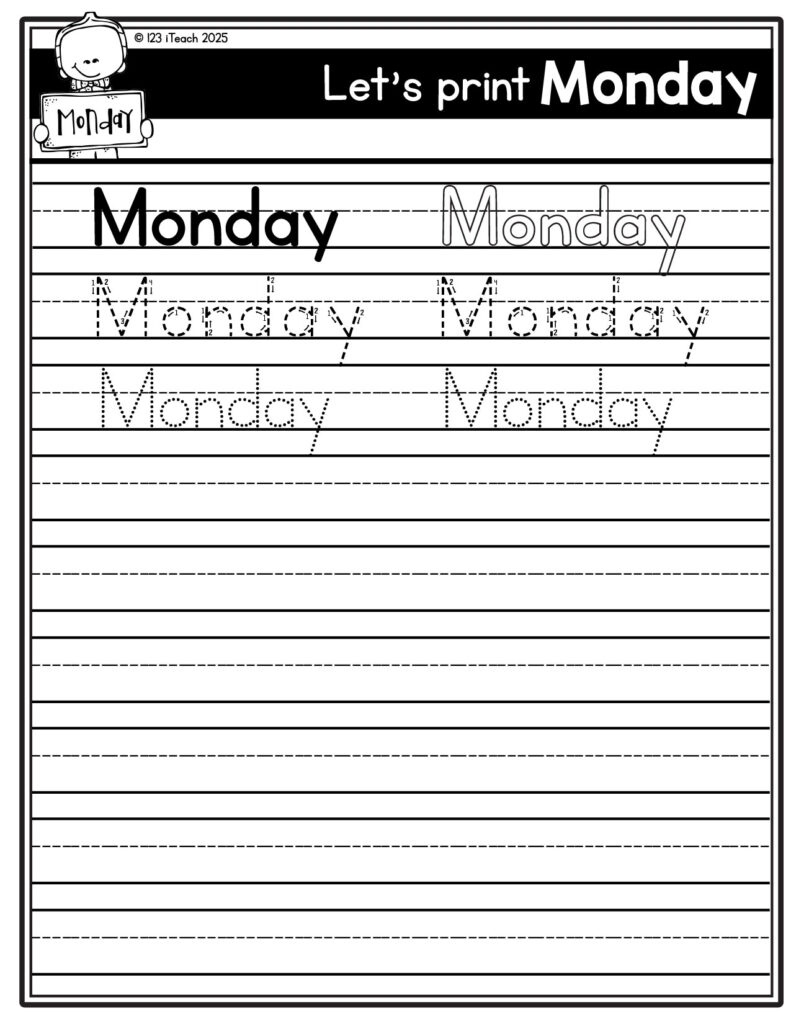
Monday Handwriting Practice
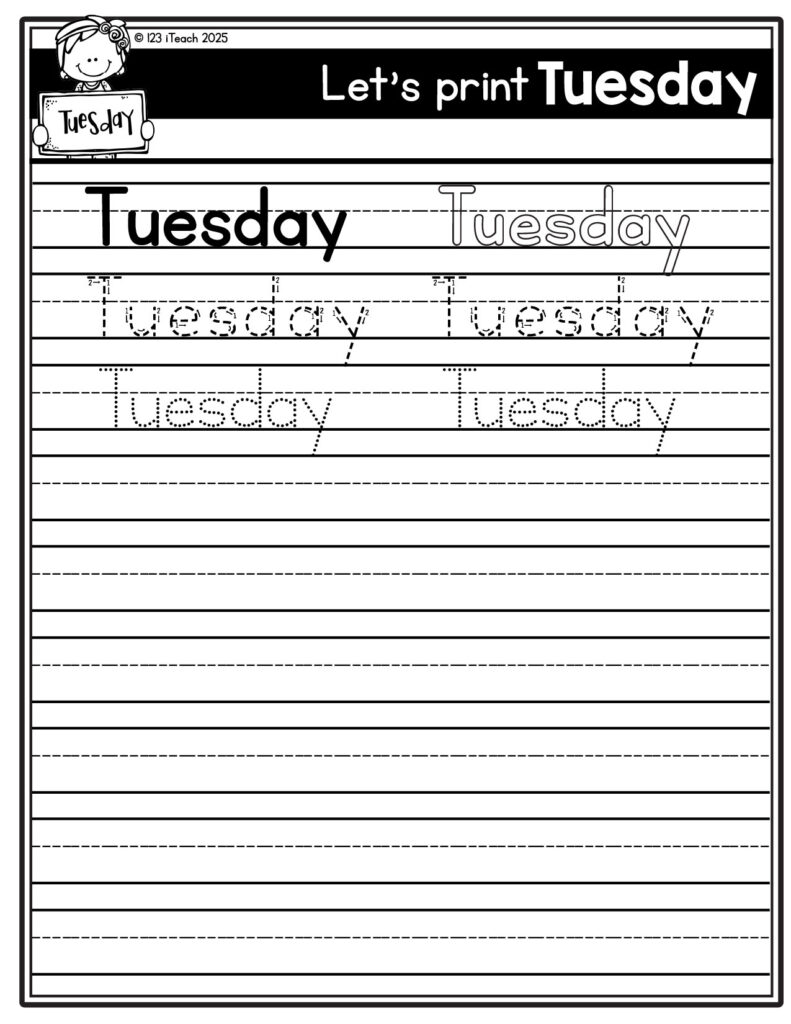
Tuesday Handwriting Practice
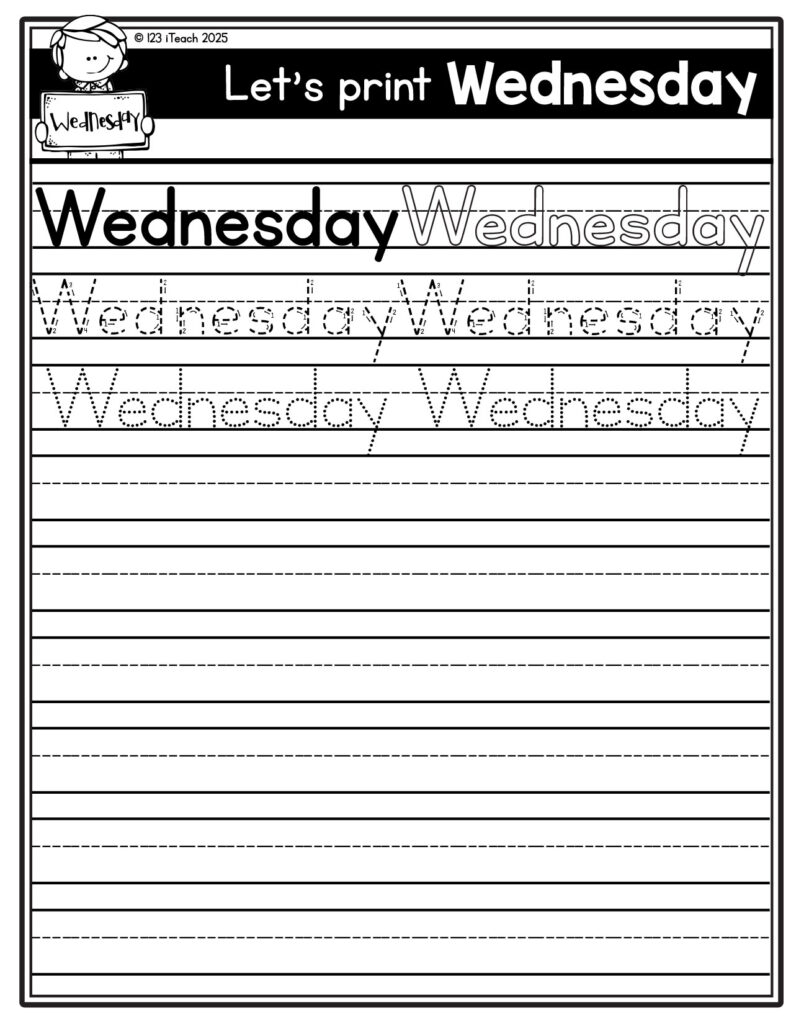
Wednesday Handwriting Practice
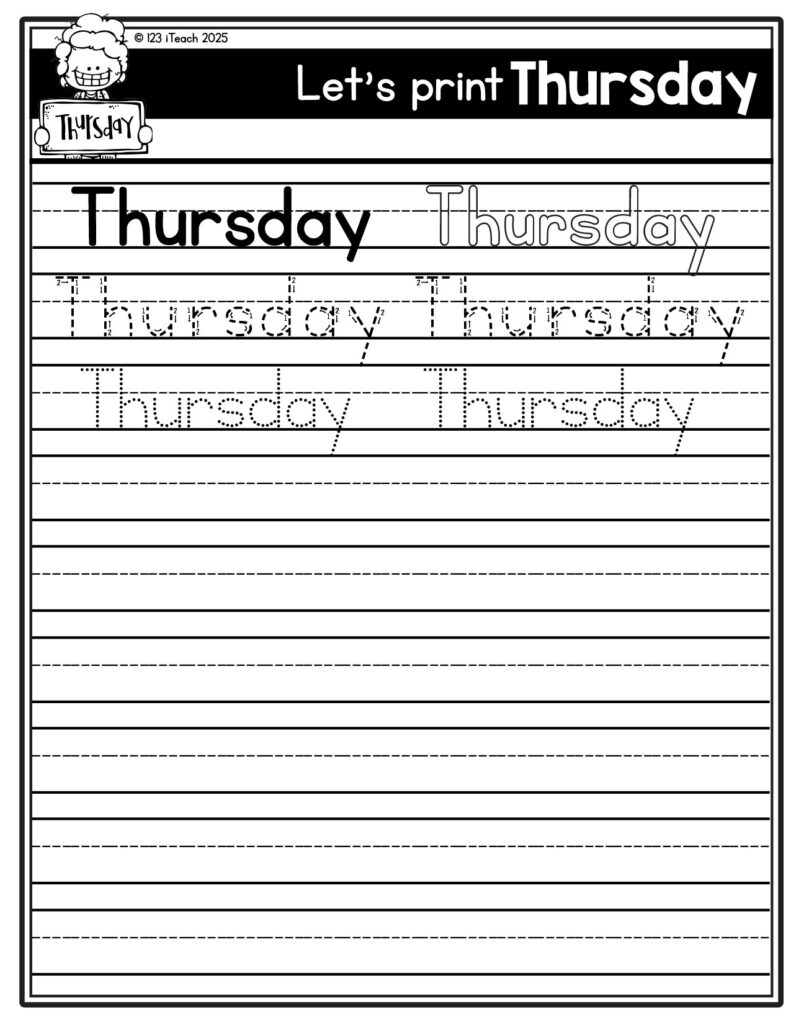
Thursday Handwriting Practice
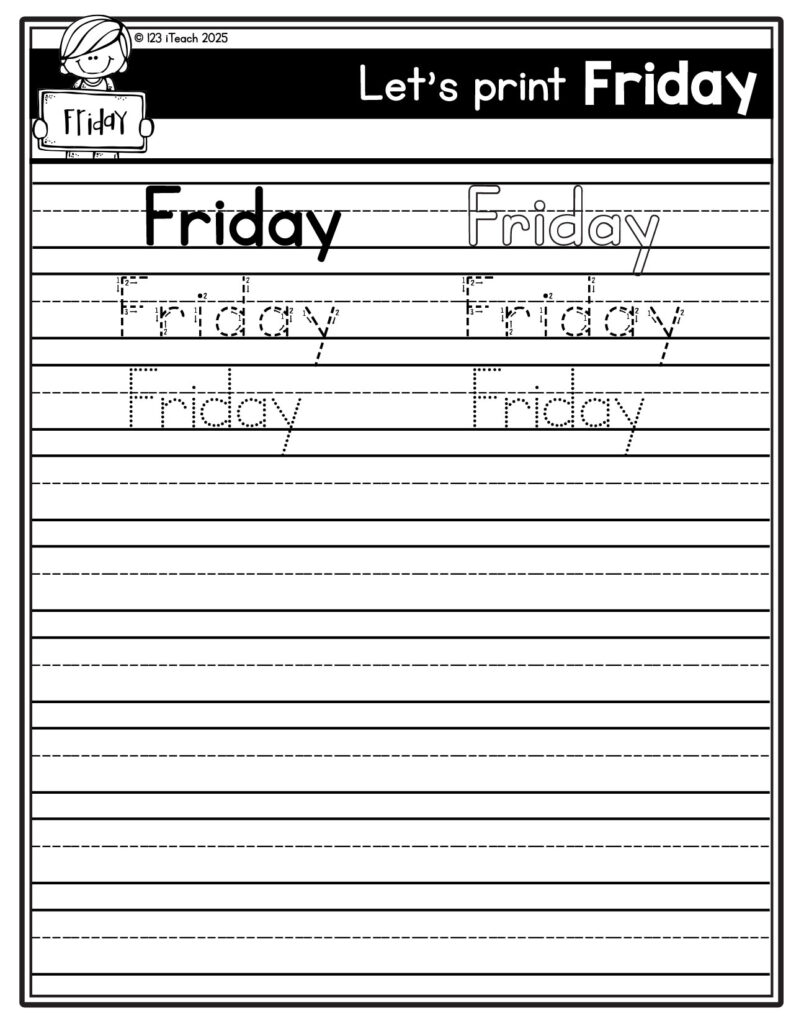
Friday Handwriting Practice
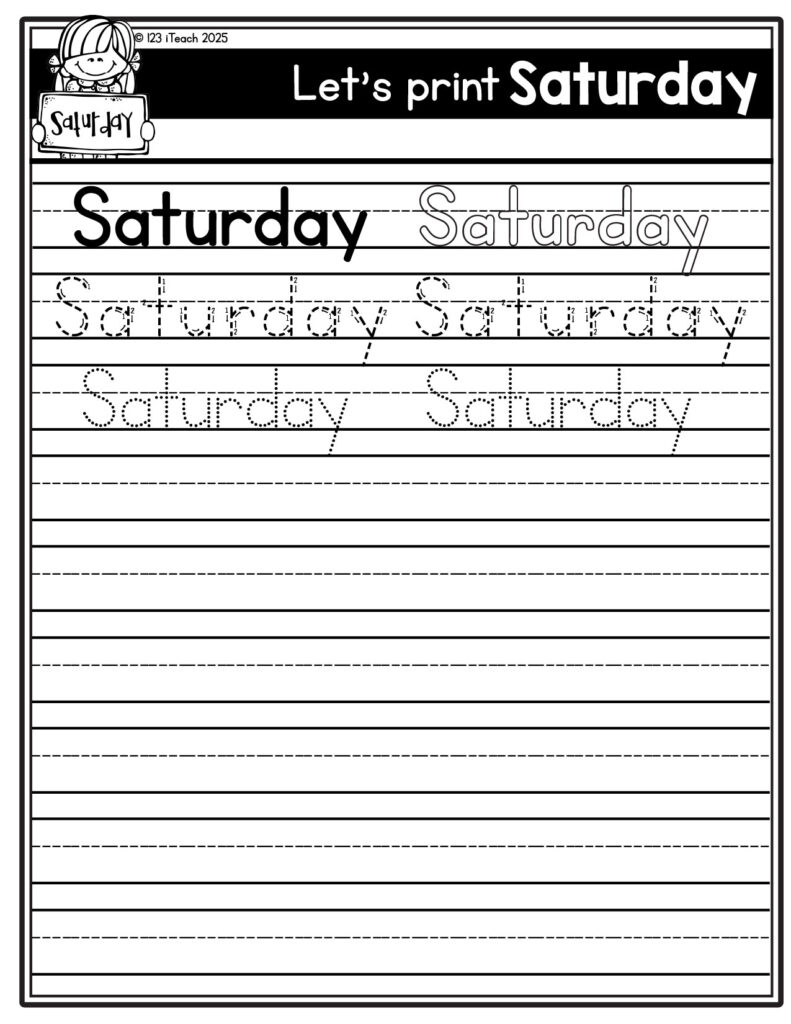
Saturday Handwriting Practice
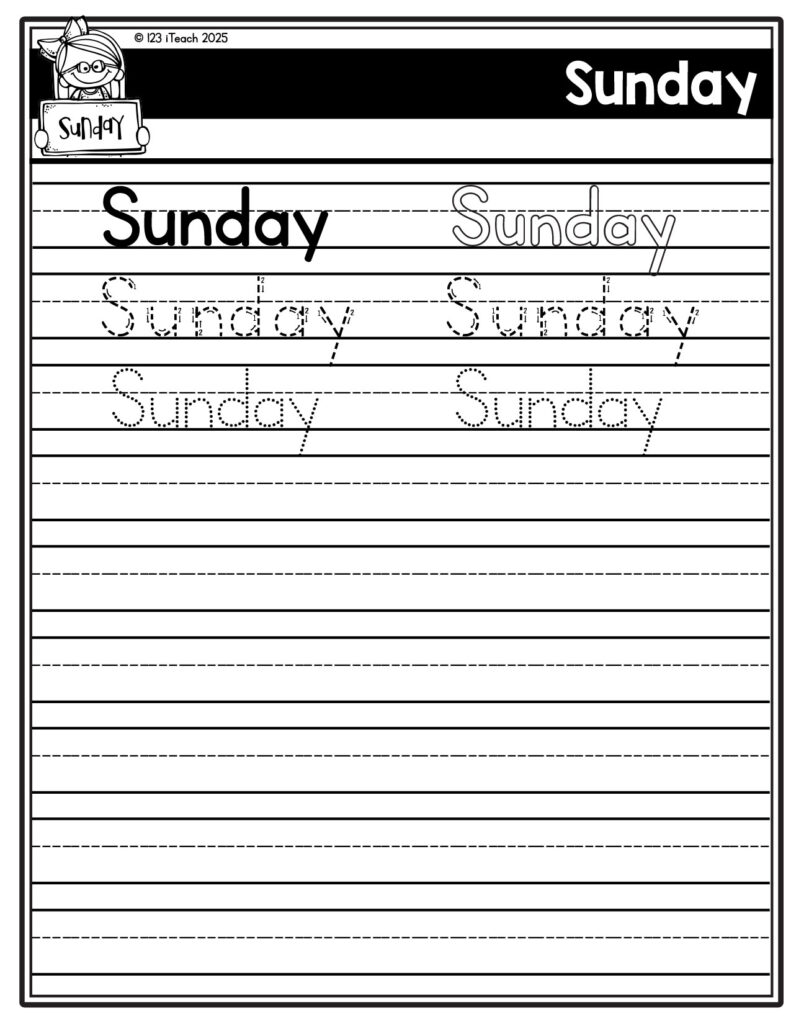
Sunday Handwriting Practice
Print vs. Cursive for Days of the Week Practice
Print handwriting is typically introduced first. It emphasizes letter recognition, basic strokes, and spacing. Practicing days of the week in print builds a solid foundation for legibility.
Cursive handwriting introduces fluid motion and connection between letters. Days like “Monday” and “Sunday” work well for cursive flow practice. Longer words such as “Wednesday” help develop consistency and rhythm.
Both styles can be used together. Many educators rotate print and cursive days to keep practice engaging. This approach reinforces flexibility and long-term handwriting confidence.
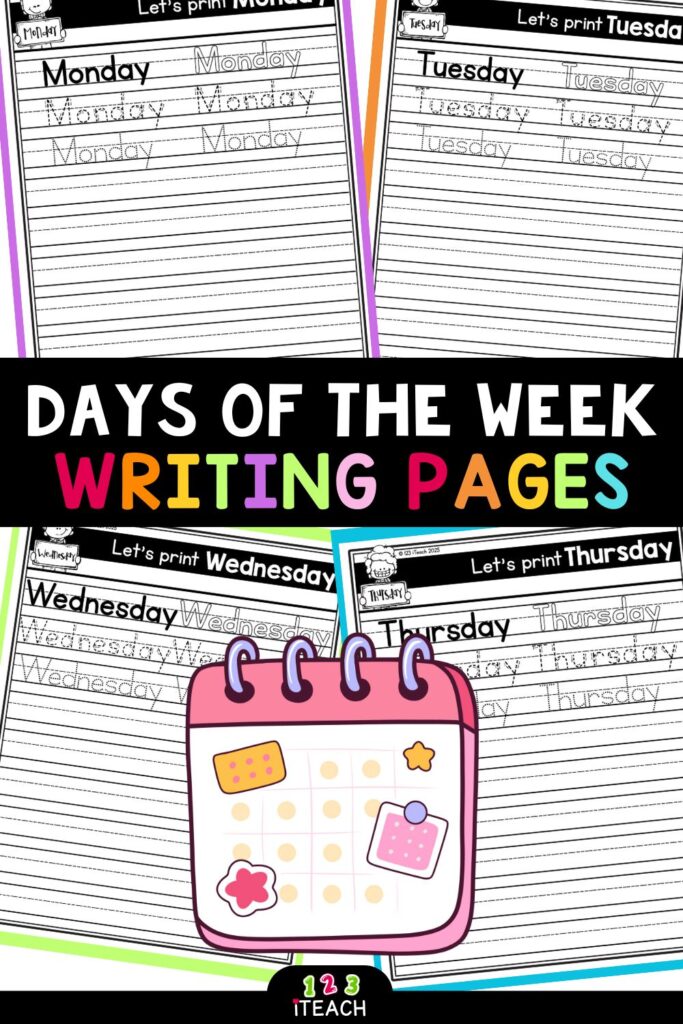
Get More Days of the Week Practice:
How to Structure Effective Days of the Week Handwriting Worksheets
A strong worksheet balances guidance with independence. Tracing lines followed by blank lines allow learners to transition gradually. Clear models at the top of the page support visual learners.
Including one day per page can reduce overwhelm. Alternatively, a full week layout helps learners see patterns and sequence. Dotted letters, arrows, and baseline guides add extra support when needed.
Worksheets should avoid clutter. Too many decorations can distract from handwriting goals. Simple layouts with consistent spacing produce better results.
Using Days of the Week Handwriting in Daily Routines
Morning work is the most common and effective time for handwriting practice. Writing the current day reinforces relevance and consistency. This habit sets a calm, focused tone for the rest of the day.
Journals and planners also work well. Writing “Today is Tuesday” before a journal entry provides a natural handwriting warm-up. Over time, learners internalize correct spelling and capitalization.
Homeschool families often combine handwriting with calendar lessons. Writing the day, date, and weather integrates multiple skills in a short activity. This cross-curricular approach maximizes learning without adding workload.
Common Challenges and How to Address Them
Some learners struggle with letter size and spacing. Using lined paper with clear baselines can help. Highlighting the baseline or using raised-line paper provides additional sensory feedback.
Fatigue is another common issue. Long words like “Wednesday” can be tiring for beginners. Breaking practice into smaller chunks or alternating days can prevent burnout.
Motivation may also decline if practice feels repetitive. Changing fonts, using seasonal themes, or rotating between print and cursive keeps learners engaged. Familiar words still feel fresh with small variations.