A Calm, Effective Way to Teach Calendar Skills All Year Long
Teaching the months of the year sounds simple, but for young children it’s a big concept. Months require memory, sequence, language, and real-world connection. Months of the year coloring pages help bring all of that together in a way that feels approachable and developmentally appropriate.
For teachers, these pages offer low-prep practice that slides easily into calendar time, morning work, or centers. For parents and homeschool families, they provide meaningful learning without battles or burnout. Coloring gives kids time to process new information while keeping their hands busy and their minds engaged.
Below is a month-by-month look at how January through December coloring pages can support early learners at home and in the classroom.
Check out our FULL alphabet curriculum
Ready for Alphabet Instruction That Actually Works?
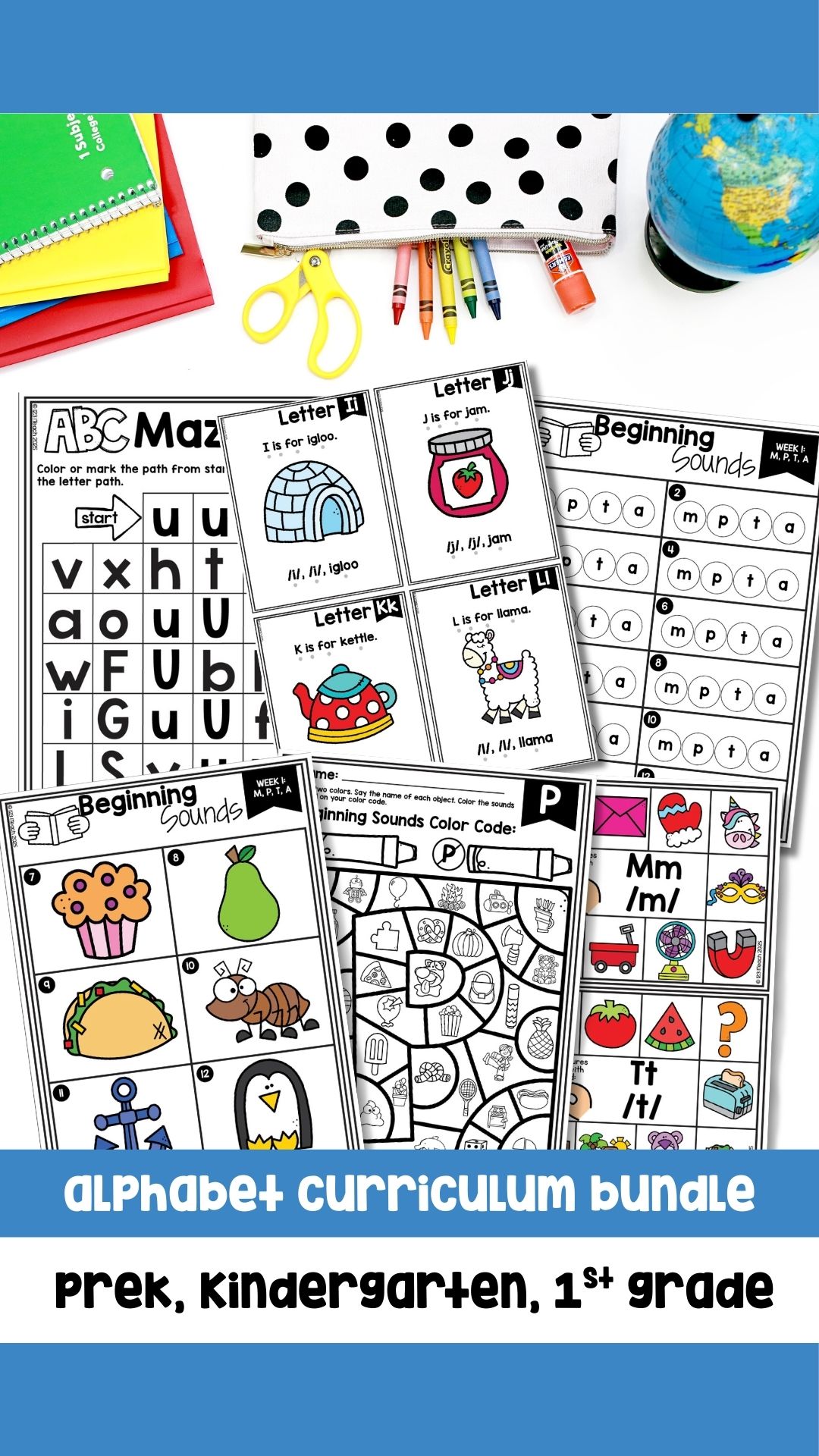
If you’re tired of guessing which letters to teach next or piecing together alphabet activities that don’t quite fit, the Alphabet Curriculum Bundle gives you a clear, research-based plan.
This complete, Science of Reading aligned curriculum shows you what to teach, in what order, and how to practice it—without extra prep.
- You follow a purposeful letter sequence that supports early decoding
- Students build letter recognition, beginning sound awareness, and proper letter formation
- Lessons feel consistent and predictable, which boosts independence
- Your planning time drops because everything is ready to print and use
Instead of collecting more alphabet printables, you finally have a system that works.
Want the Full Alphabet Plan?
If you want alphabet instruction that builds real reading foundations—and saves you time—the Alphabet Curriculum Bundle is ready for you.
Why Months of the Year Coloring Pages Work
Young children learn best through repetition and visual cues. Coloring pages provide both. Each page reinforces the month name while connecting it to familiar images, seasons, and routines.
Coloring pages also support fine motor development, pencil control, and focus—key skills in PreK through second grade. Because they feel calm and predictable, they work well for independent practice, small groups, early finishers, or quiet learning at home.
January Coloring Pages
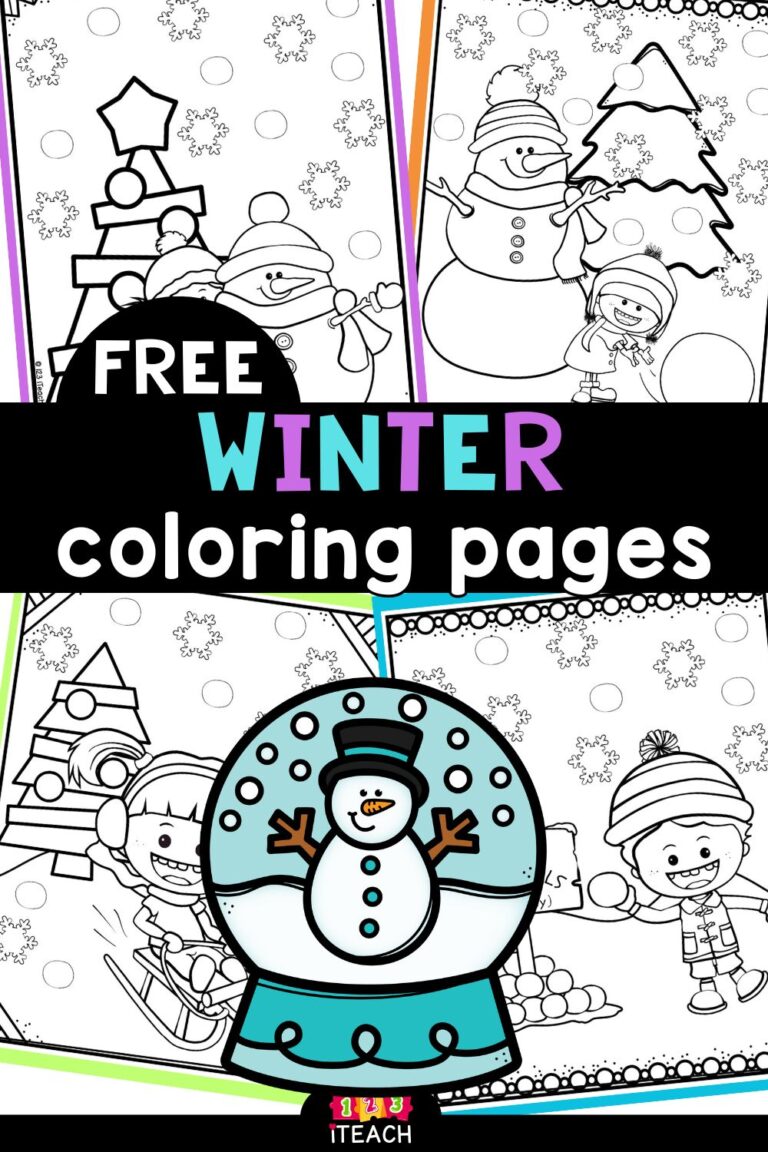
A January coloring page often includes winter imagery like snowflakes, mittens, hats, or cozy scenes. January coloring pages are especially important because January is the first month of the year, making it the natural starting point for calendar instruction.
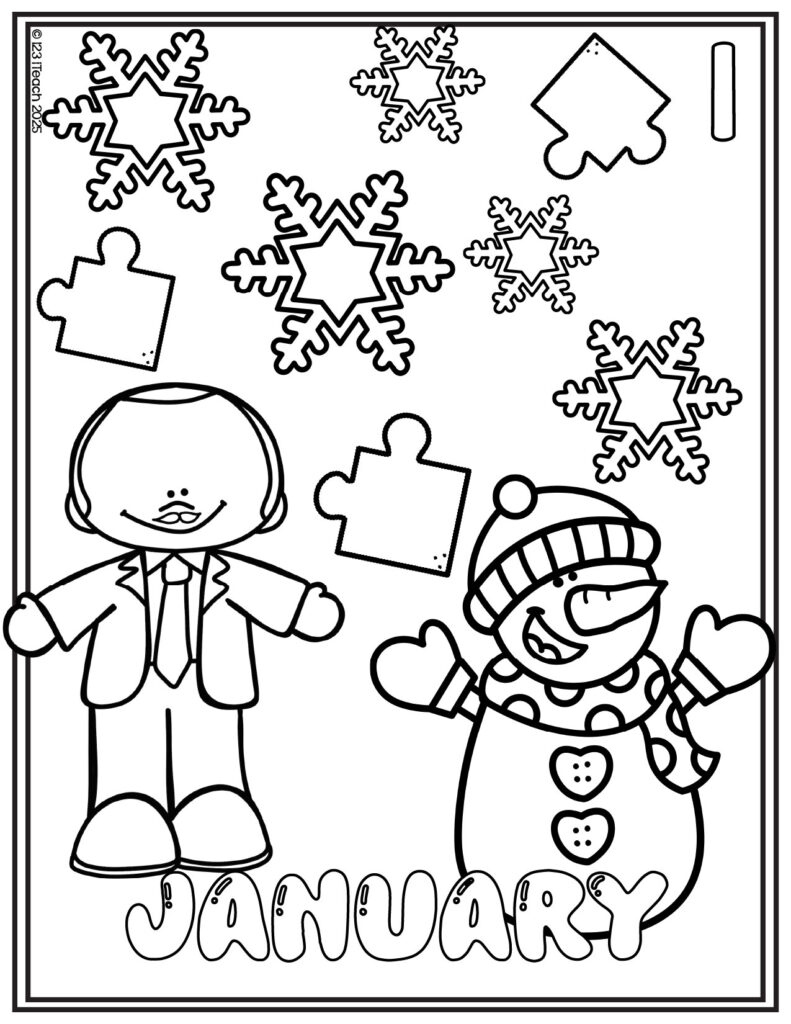
Teachers often introduce the year with January coloring pages during calendar time. Parents can use a January coloring page to talk about winter weather and new beginnings. Displaying finished pages helps children visually anchor the start of the year.
February Coloring Pages
A February coloring page may feature hearts, winter themes, or simple seasonal images. February coloring pages are helpful for reinforcing that not all months look or feel the same.
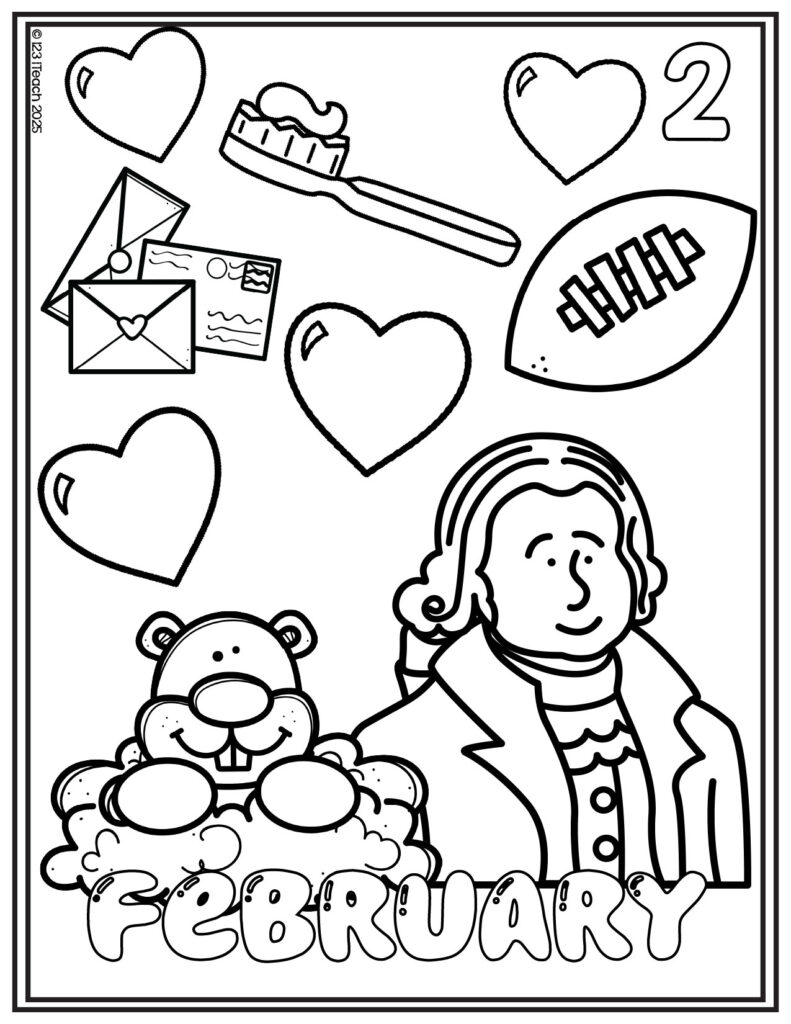
In classrooms, February coloring pages fit easily into morning work or quiet transitions. At home, a February coloring page offers short, focused practice that works well for young attention spans.
March Coloring Pages
March coloring pages often show rain, shamrocks, or early signs of spring. A March coloring page is a great way to talk about seasonal change and connect the calendar to what children see outside.
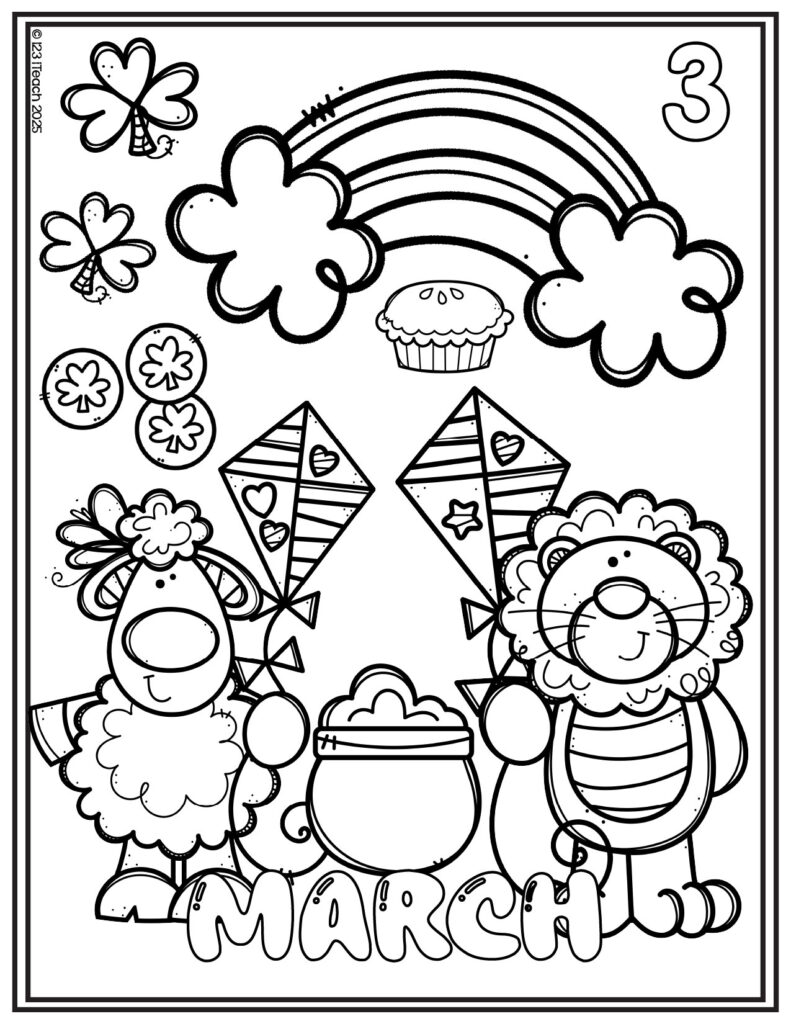
Teachers may pair March coloring pages with weather discussions or read-alouds. Parents can use a March coloring page to notice changes in nature and talk about what month comes next.
April Coloring Pages
An April coloring page typically includes flowers, umbrellas, or nature-themed designs. April coloring pages support conversations about spring, growth, and changing weather.
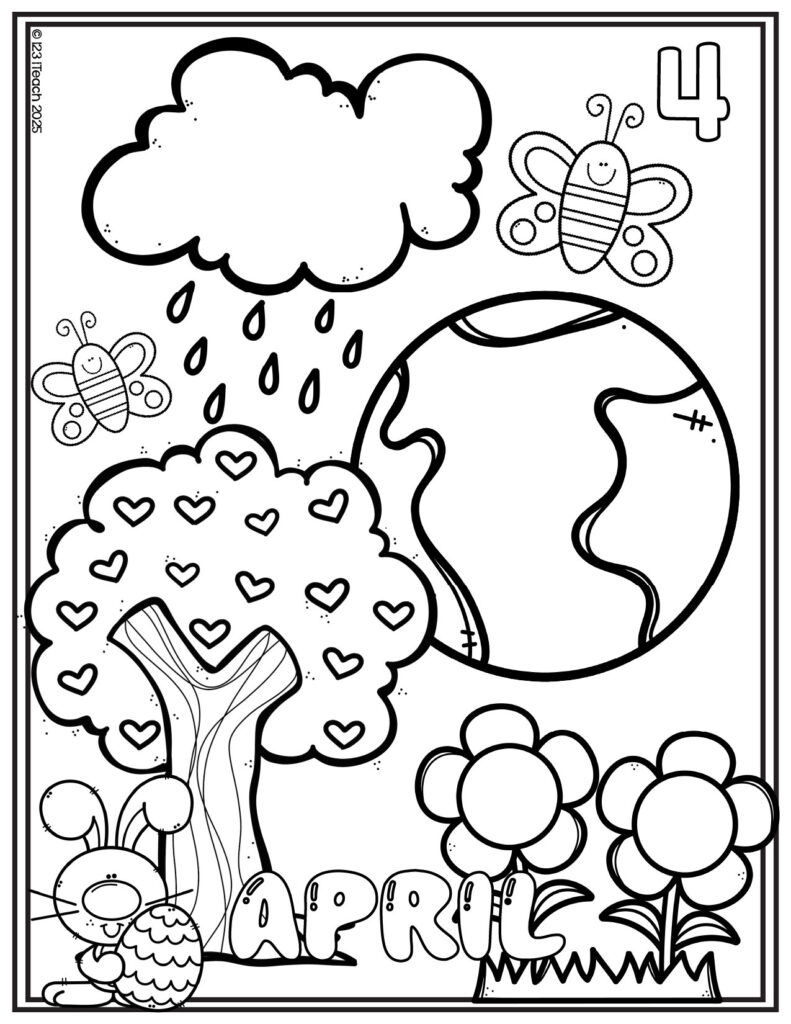
These pages work well during science lessons, Earth Day activities, or quiet independent work. At home, an April coloring page encourages observation and conversation while reinforcing the month name.
May Coloring Pages
May coloring pages often highlight flowers, sunshine, and outdoor play. A May coloring page feels upbeat and motivating, which helps keep kids engaged late in the school year.
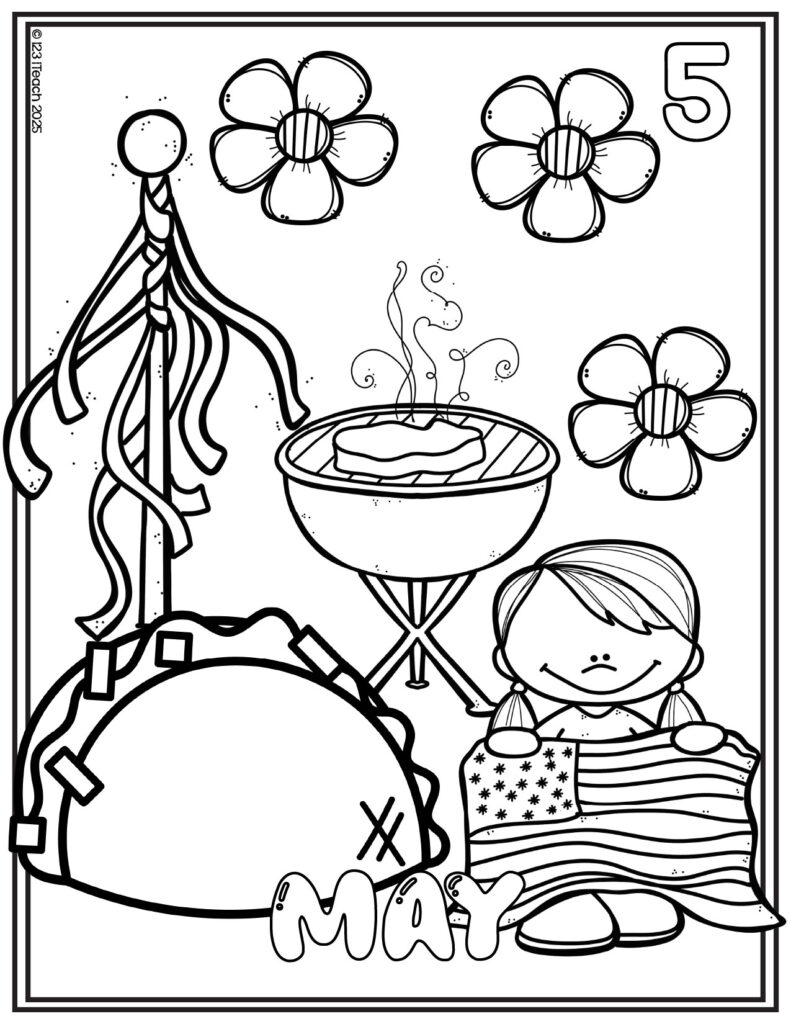
Teachers frequently use May coloring pages as part of calendar review. Parents can use a May coloring page to talk about upcoming changes like summer routines or the end of the school year.
June Coloring Pages
A June coloring page usually reflects summer themes such as sunshine or outdoor fun. June coloring pages are valuable because they help maintain calendar skills even as schedules change.
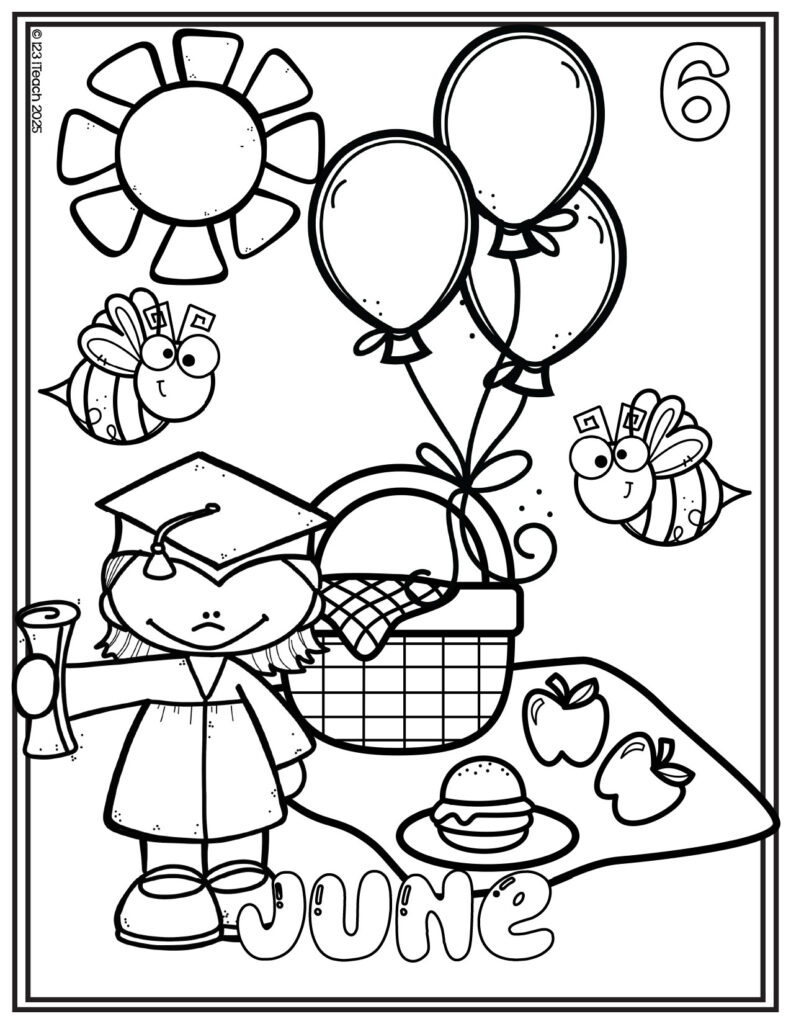
For families, a June coloring page is an easy way to keep learning consistent during summer. Teachers running summer programs can use June coloring pages to provide structure without heavy instruction.
July Coloring Pages
July coloring pages often feature summer scenes, outdoor activities, or seasonal celebrations. A July coloring page helps children connect the month to experiences they recognize.
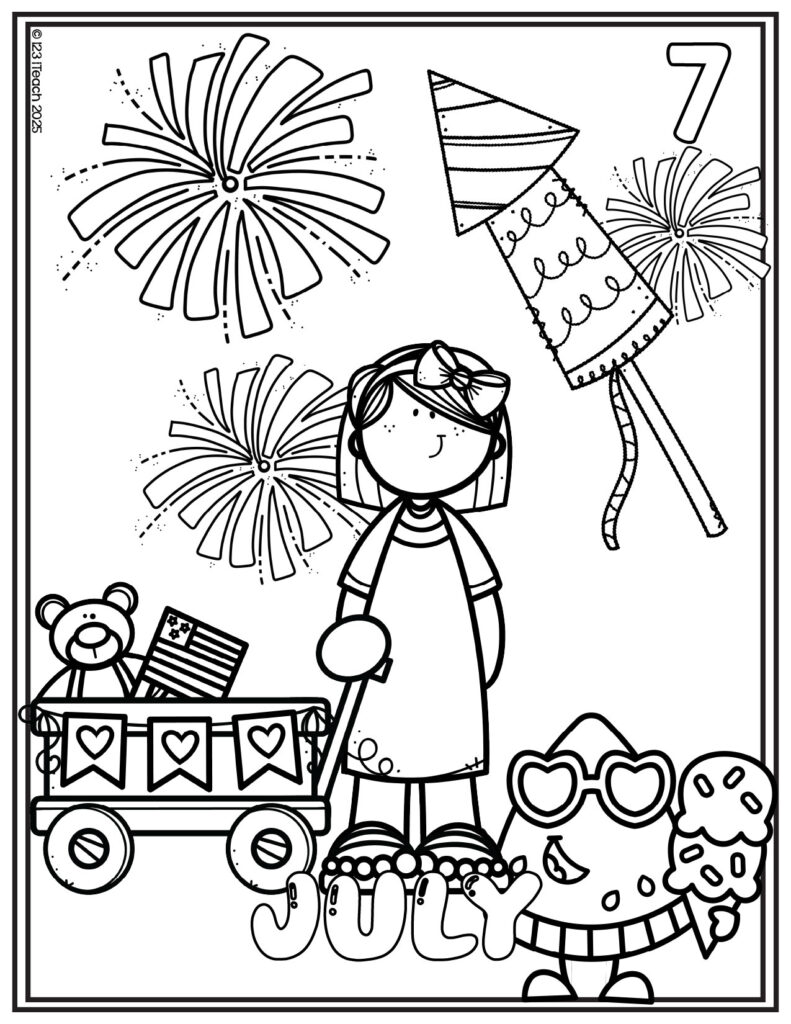
Parents often use July coloring pages during travel or downtime. In educational settings, July coloring pages support continuity when routines are different from the school year.
August Coloring Pages
An August coloring page may include late-summer imagery or back-to-school themes. August coloring pages are especially helpful for easing transitions.
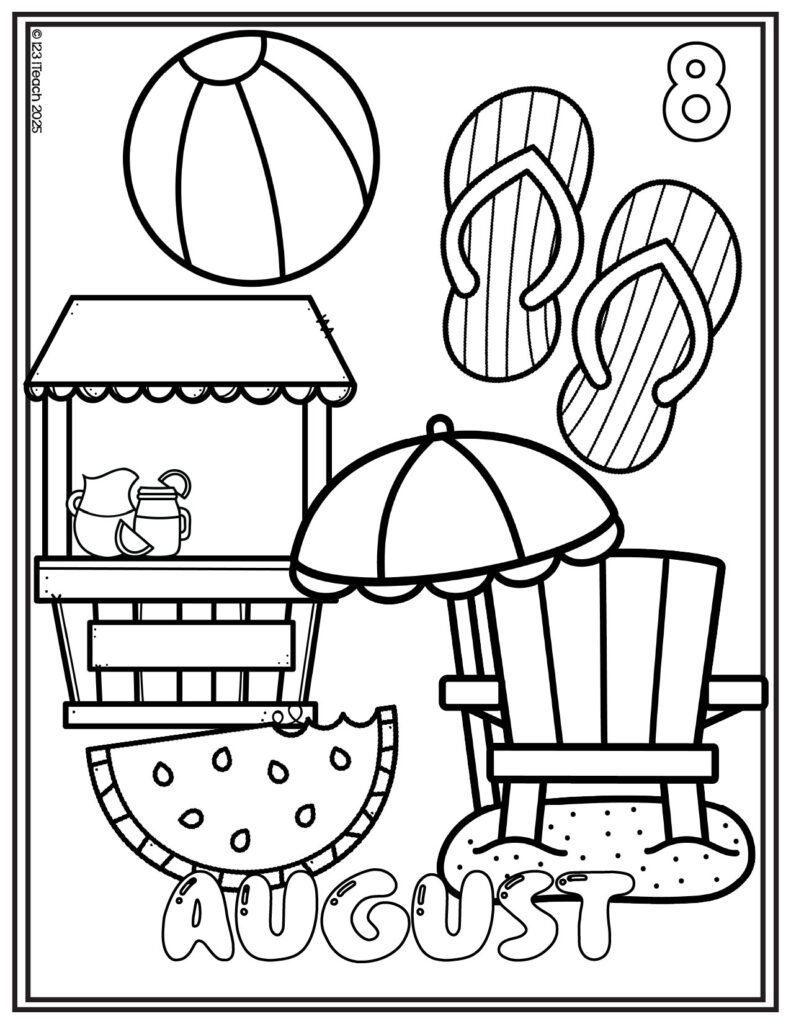
For children feeling nervous about new routines, an August coloring page keeps learning familiar and predictable. Teachers can use August coloring pages to gently reintroduce calendar habits.
September Coloring Pages
September coloring pages often include school-related images like apples, backpacks, or classrooms. A September coloring page feels concrete and relatable for young learners.
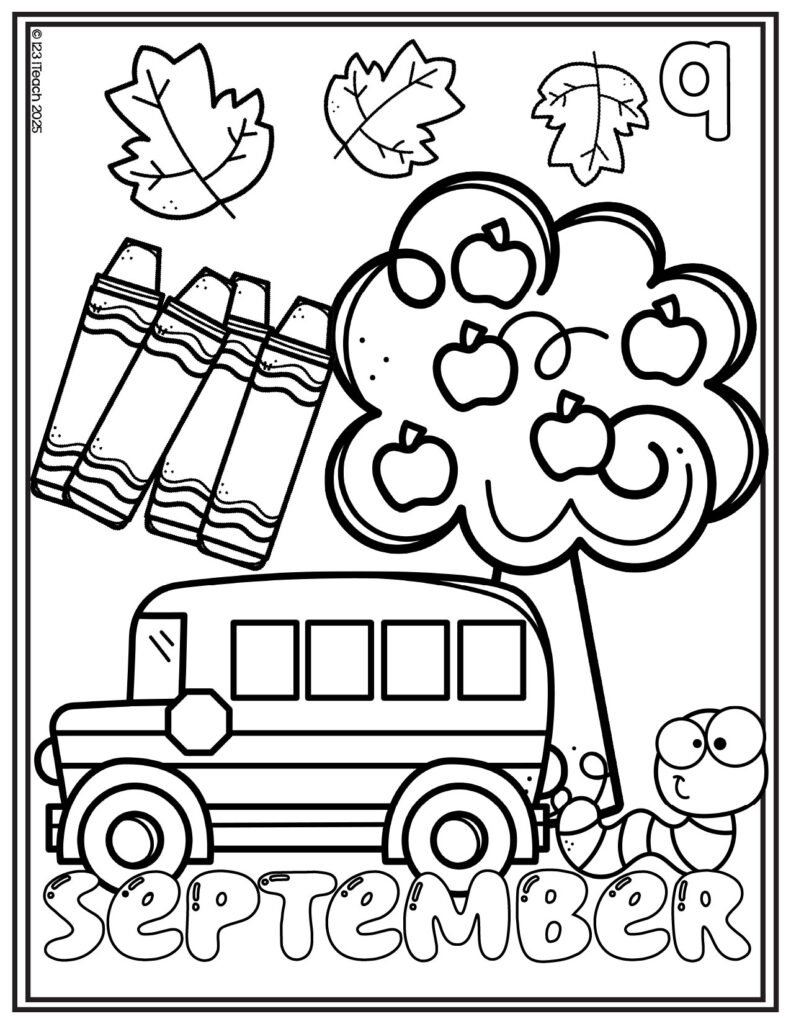
Teachers commonly use September coloring pages during the first weeks of school to establish calendar routines. Parents can use a September coloring page to support children adjusting to new schedules.
October Coloring Pages
An October coloring page typically features fall themes such as leaves, pumpkins, or cooler weather. October coloring pages are visually rich and highly engaging.
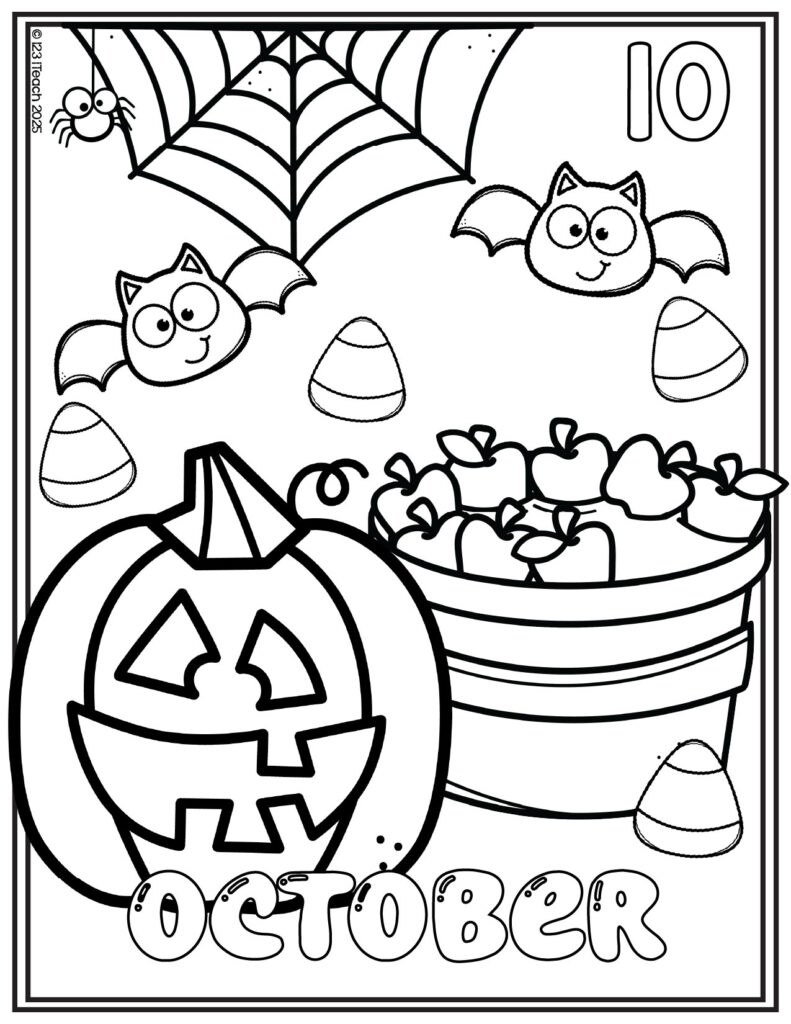
These pages work well alongside literacy activities, fall centers, or independent work time. An October coloring page helps reinforce the rhythm of the year as seasons continue to change.
November Coloring Pages
November coloring pages often include fall harvest imagery or themes of gratitude. A November coloring page encourages reflection while reinforcing month recognition.
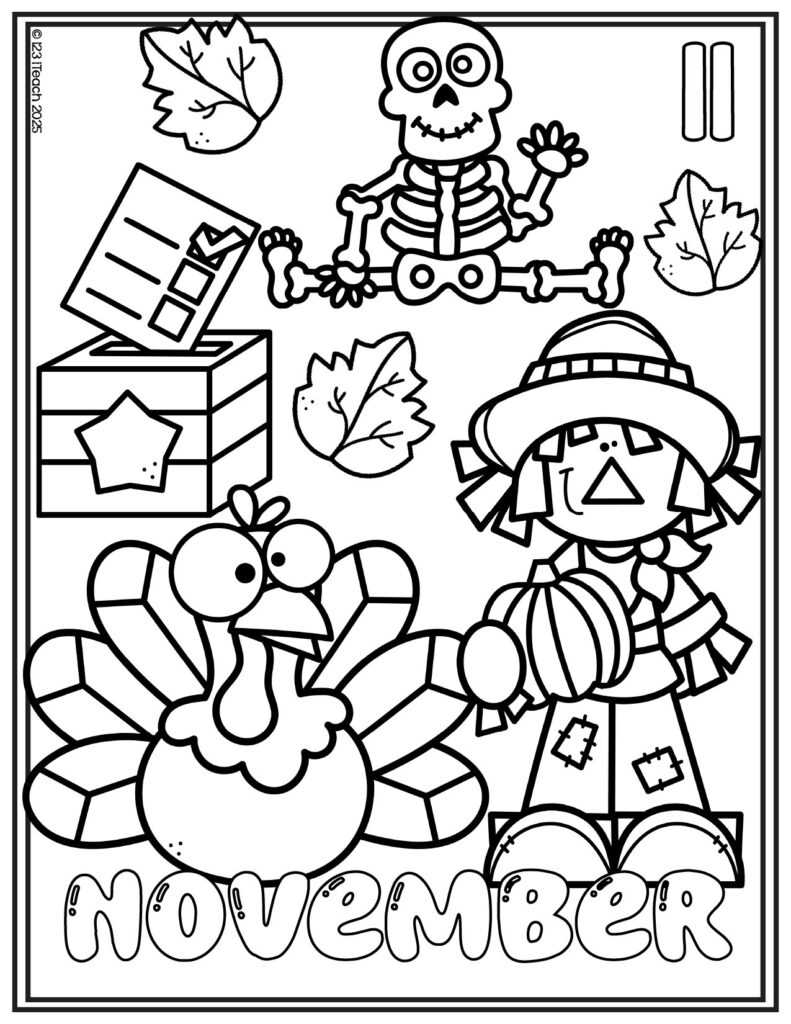
Teachers can use November coloring pages during community-building or social studies lessons. Parents can use a November coloring page to connect the calendar to family traditions.
December Coloring Pages
A December coloring page is often a favorite with young learners. December coloring pages typically include winter scenes or festive imagery, making them perfect for end-of-year reflection.
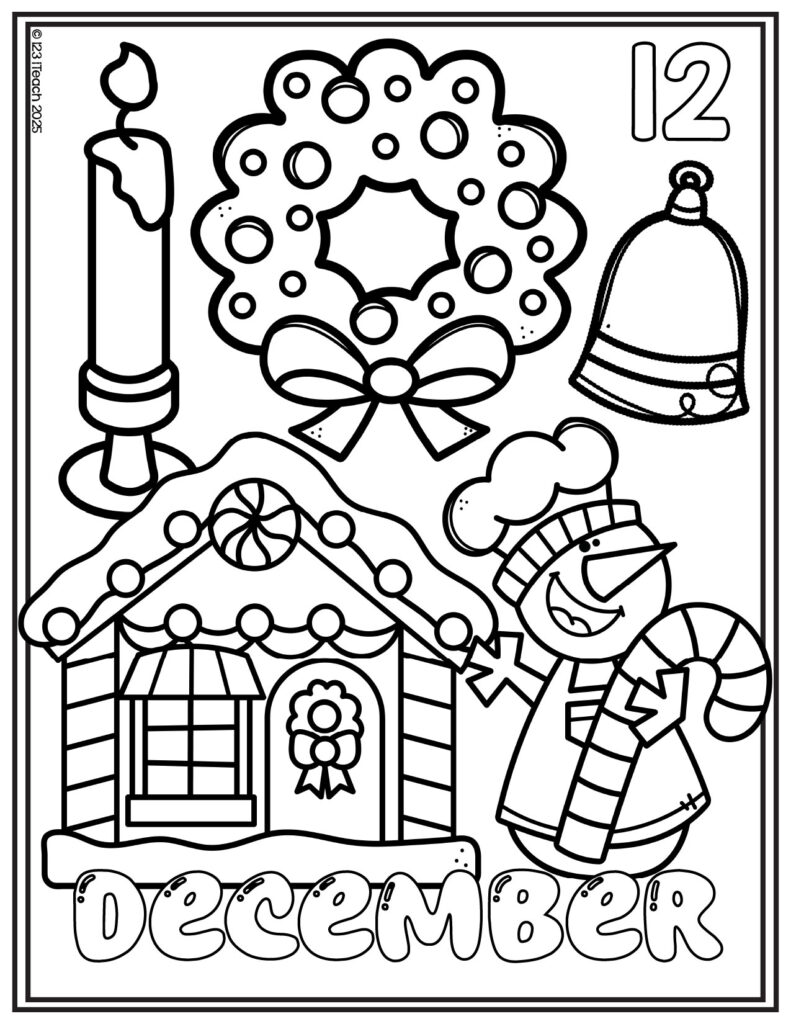
Teachers can use December coloring pages to review all twelve months and show how the year comes full circle. Parents can use a December coloring page to look back on the year and talk about what comes next.
Tips for Using Months of the Year Coloring Pages
Consistency matters more than complexity. Using one coloring page each month builds familiarity and confidence. Displaying pages in order helps children visually see how the year progresses.
Say the month name out loud while children color. Ask simple questions like, “What month comes next?” or “What season is this?” to reinforce understanding without pressure.
Want even more Pre-K to 1st Grade Resources?
(there are worksheets, coloring pages, Google Slide activities, centers and more!).
A Simple Resource with Lasting Impact
Months of the year coloring pages may look simple, but they support meaningful learning. They help children understand sequence, build vocabulary, and make sense of time in a calm, developmentally appropriate way.
For teachers, they save planning time and fit naturally into daily routines. For parents, they offer learning that feels manageable and effective.
Used consistently, months of the year coloring pages help children move beyond memorization and toward a real understanding of how the year works—one month at a time.