A simple daily routine that builds big skills in PreK–2
Early learners thrive on routines. They crave predictability, repetition, and small wins they can master each day. Fill in the date and trace the date calendar pages check all of those boxes while quietly building foundational academic skills.
For teachers, these pages are an easy morning starter or calendar time extension.
For parents, they are a low-pressure way to bring learning into everyday life without turning your kitchen table into a classroom.
Let’s break down why these simple calendar worksheets work, what skills they support, and how to use them effectively in both classroom and home settings.
What Are Fill in the Date & Trace the Date Pages?
Fill in the date and trace the date pages are daily calendar worksheets designed for young learners. Each page typically includes:
- Tracing the month
- Tracing or writing the day of the week
- Filling in the numerical date
- Writing or tracing the year
Some versions also include visual supports like number lines, dotted letters, or clear spacing to guide early writers.
These pages are intentionally simple. They focus on consistency and repetition, not novelty. That’s what makes them powerful.
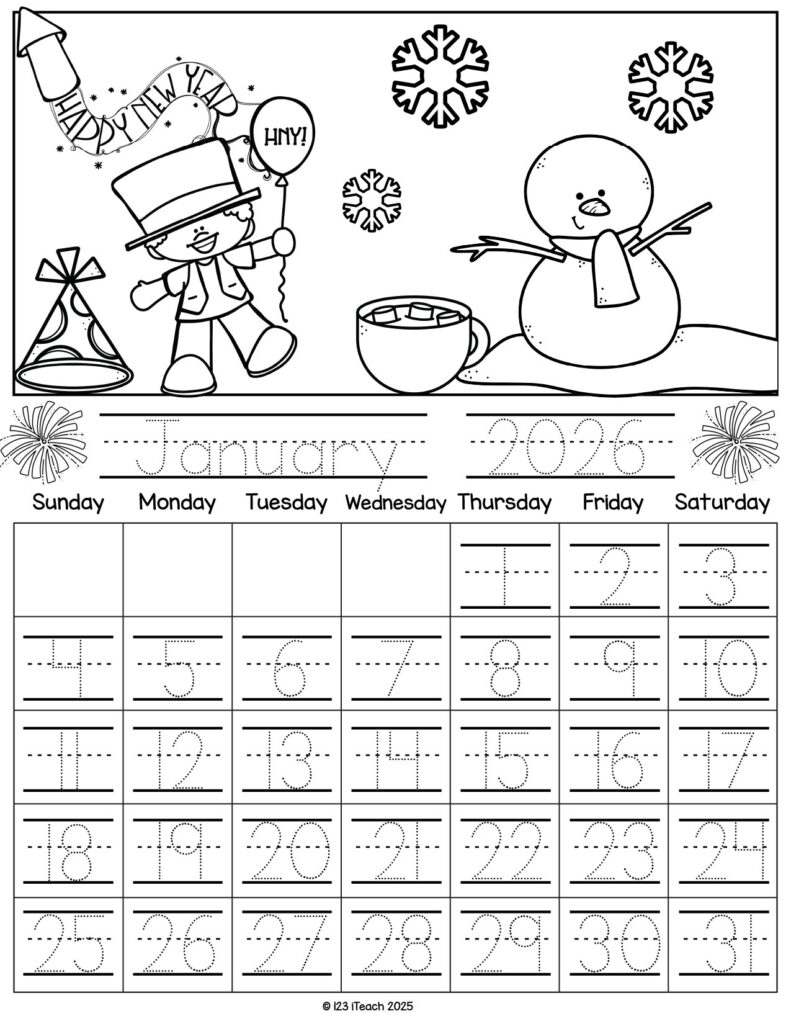
January Trace-the-Date Calendar
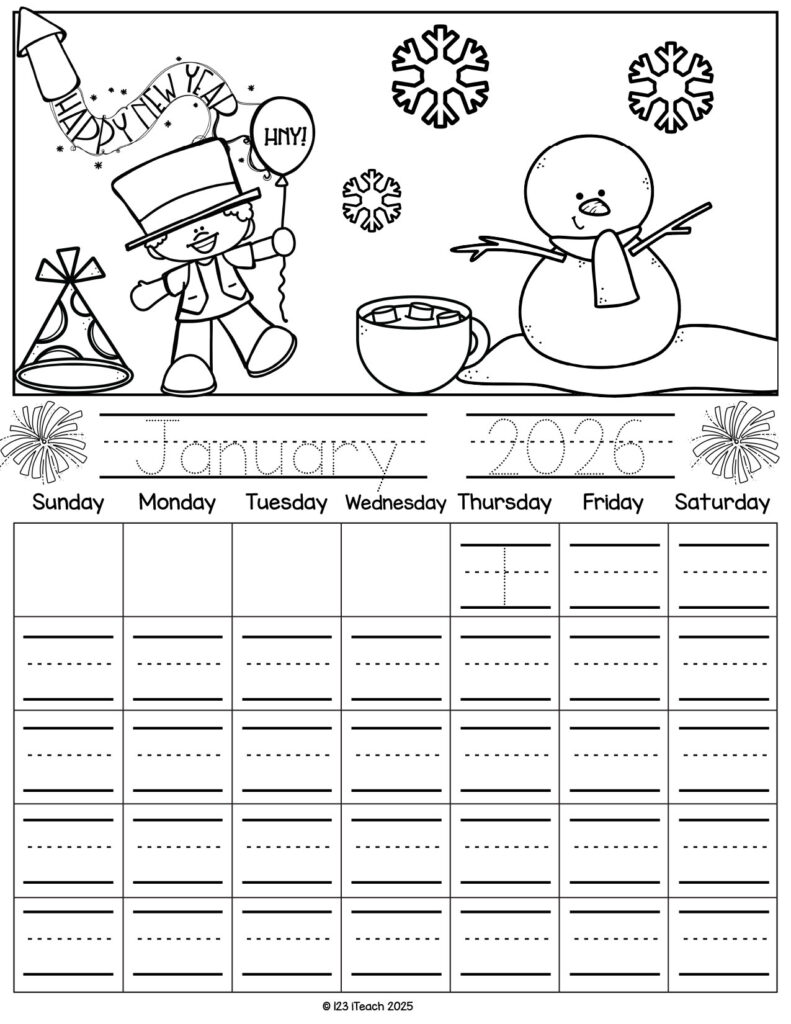
January Fill-in-the-Date Calendar
Why Calendar Practice Matters in Early Childhood
Calendar skills may seem basic, but they support multiple areas of early development at once.
1. Builds Real-World Time Awareness
Young children do not naturally understand time. Daily calendar practice helps them connect words like today, yesterday, tomorrow, month, and year to real experiences.
This is especially helpful for:
- PreK and Kindergarten students learning classroom routines
- First and second graders solidifying sequencing and order
Repeated exposure makes time concepts concrete instead of abstract.
2. Strengthens Fine Motor Skills
Tracing the date isn’t busywork. It’s targeted fine motor practice.
Each page supports:
- Pencil grip development
- Controlled tracing movements
- Proper letter and number formation
For children who struggle with handwriting stamina, short daily tracing is far more effective than long writing assignments.
3. Reinforces Letter and Number Recognition
Calendar pages naturally review:
- Month names (often the longest and trickiest words for early writers)
- Days of the week
- Numbers 1–31
Because students see and write these words every day, recognition becomes automatic.
This repetition supports both phonics development and number sense without extra worksheets.
4. Encourages Independence and Confidence
Fill in the date pages are predictable. Students know what to expect.
That predictability allows:
- Independent work habits
- Reduced anxiety for hesitant learners
- A strong sense of “I can do this” first thing in the day
For teachers, this means calmer mornings.
For parents, this means less resistance and more cooperation.
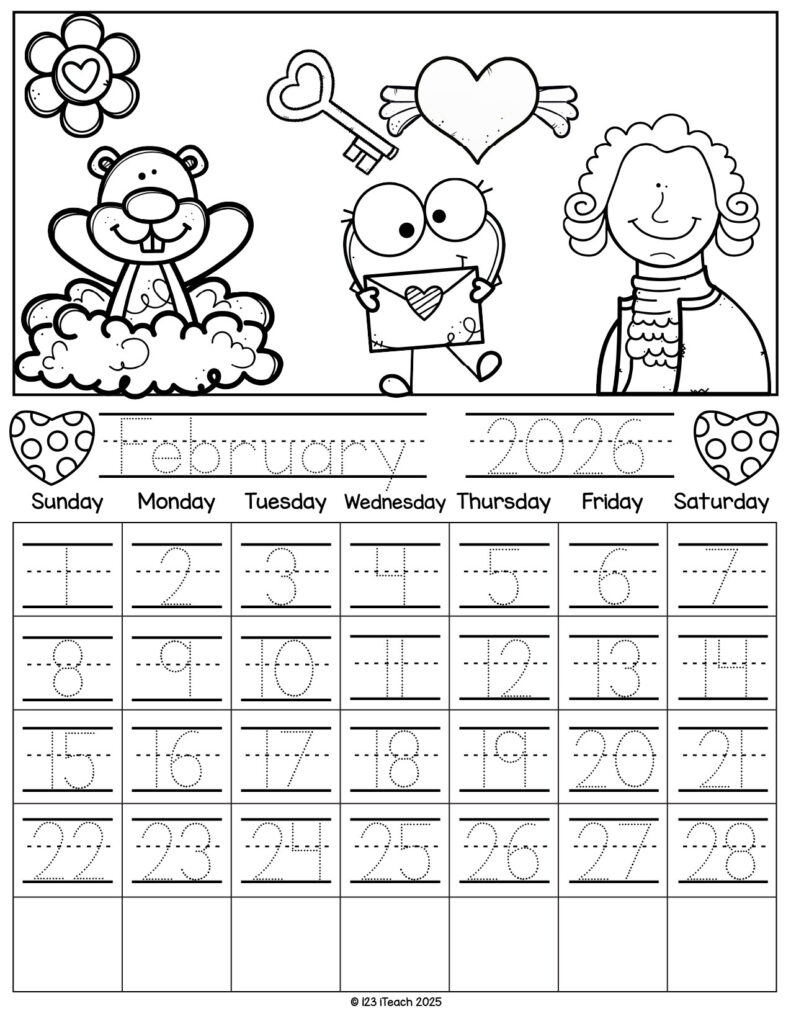
February Trace-the-Date Calendar
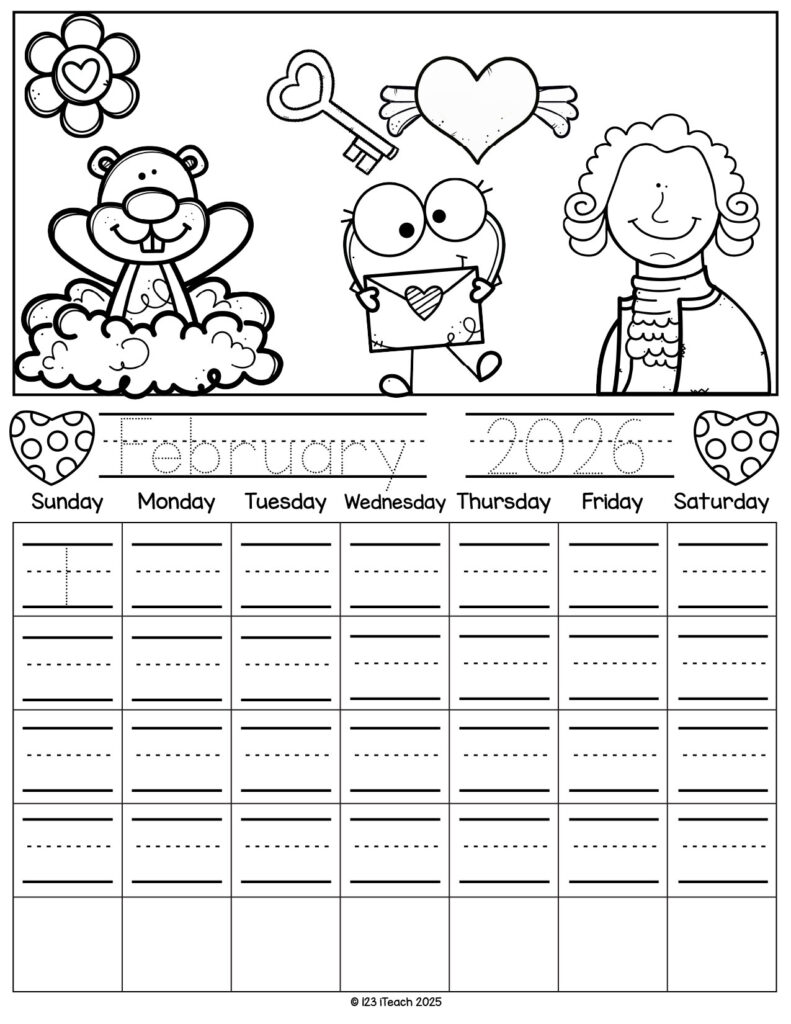
February Fill-in-the-Date Calendar
How Teachers Use Date Worksheets in the Classroom
Date tracing pages fit seamlessly into early elementary schedules.
Morning Work
Many teachers use these pages as morning tubs or bell ringers. Students enter the room, grab the page, and get started immediately.
This routine:
- Sets the tone for the day
- Gives teachers time for attendance and check-ins
- Reinforces classroom structure
Calendar Time Extension
During whole-group calendar time, students often participate verbally but lack hands-on practice. Date worksheets bridge that gap.
After calendar time, students complete the page independently to reinforce what was discussed aloud.
Small Group or Intervention Support
For students who need extra support with:
- Number formation
- Letter formation
- Understanding date concepts
These pages provide daily, low-stakes practice that doesn’t feel like remediation.
How Parents Can Use Date Pages at Home
You do not need a full homeschool setup to make calendar pages effective.
Morning Routine Anchor
Using a date page at breakfast or before free play helps children:
- Transition into learning mode
- Practice focus and task completion
- Build consistency without pressure
Five minutes is enough.
Gentle Handwriting Practice
If handwriting is a struggle, tracing the date is a safe starting point. The content is familiar, so the child can focus on the motor skill rather than what to write.
This is especially helpful for:
- Preschoolers preparing for Kindergarten
- Kindergarten students still developing control
- First graders needing extra handwriting confidence
Visual Support for Daily Conversations
When children fill in the date themselves, it supports conversations like:
- “What day is library day?”
- “How many days until the weekend?”
- “What month comes next?”
Learning sticks when it connects to real life.
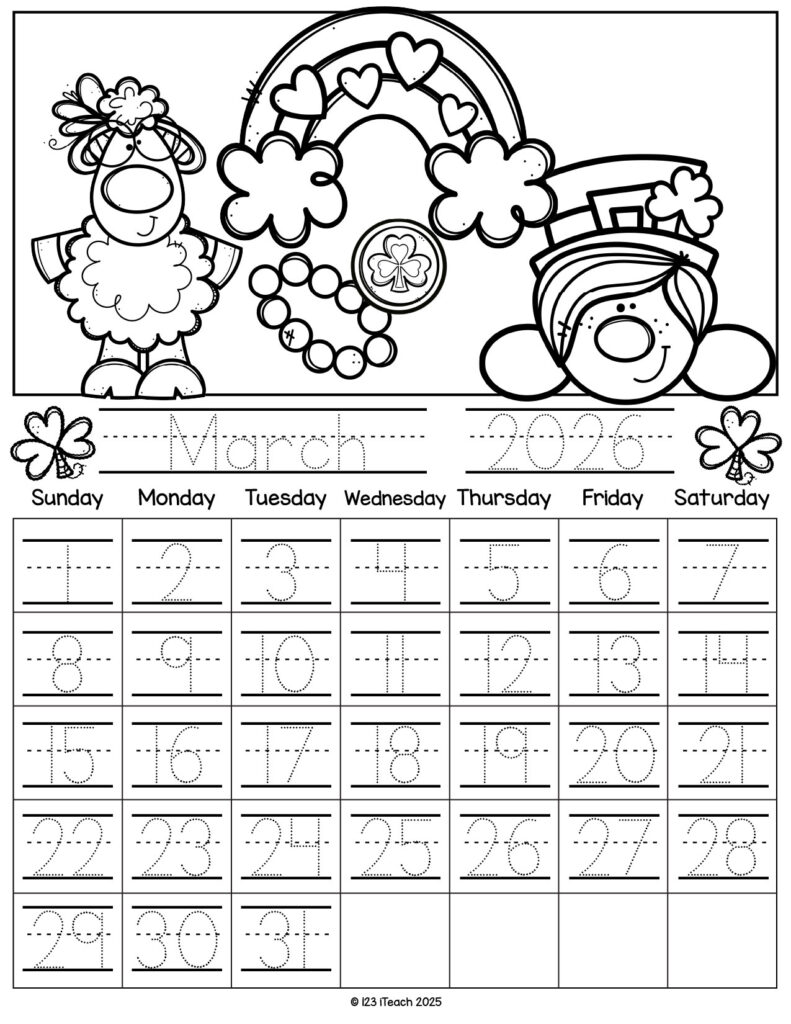
March Trace-the-Date Calendar
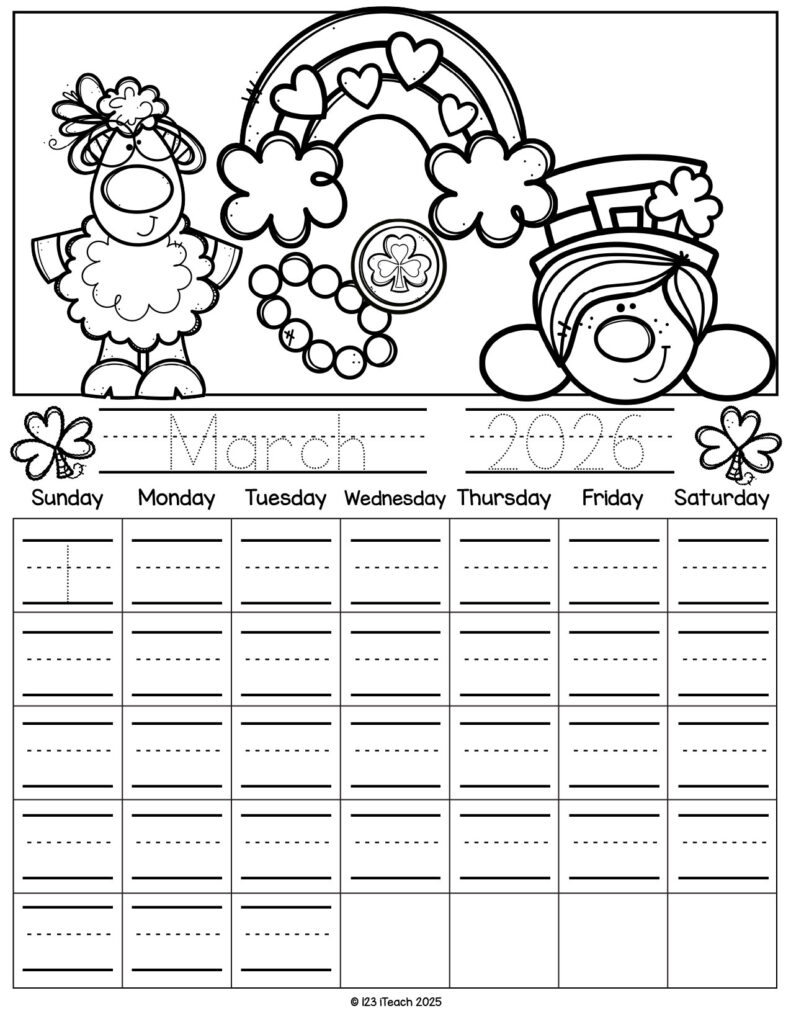
March Fill-in-the-Date Calendar
Best Practices for Using Fill in the Date Pages
To get the most out of these worksheets, keep a few best practices in mind.
Keep It Daily
Consistency matters more than variety. Using the same format every day builds mastery faster than switching styles.
Match the Level
PreK students benefit most from tracing.
Kindergarten students may trace and write.
First and second graders should gradually move toward independent writing.
Differentiation can be as simple as choosing the right version of the page.
Keep It Short
These pages work because they are quick. Stop before frustration starts.
The goal is success and confidence, not endurance.
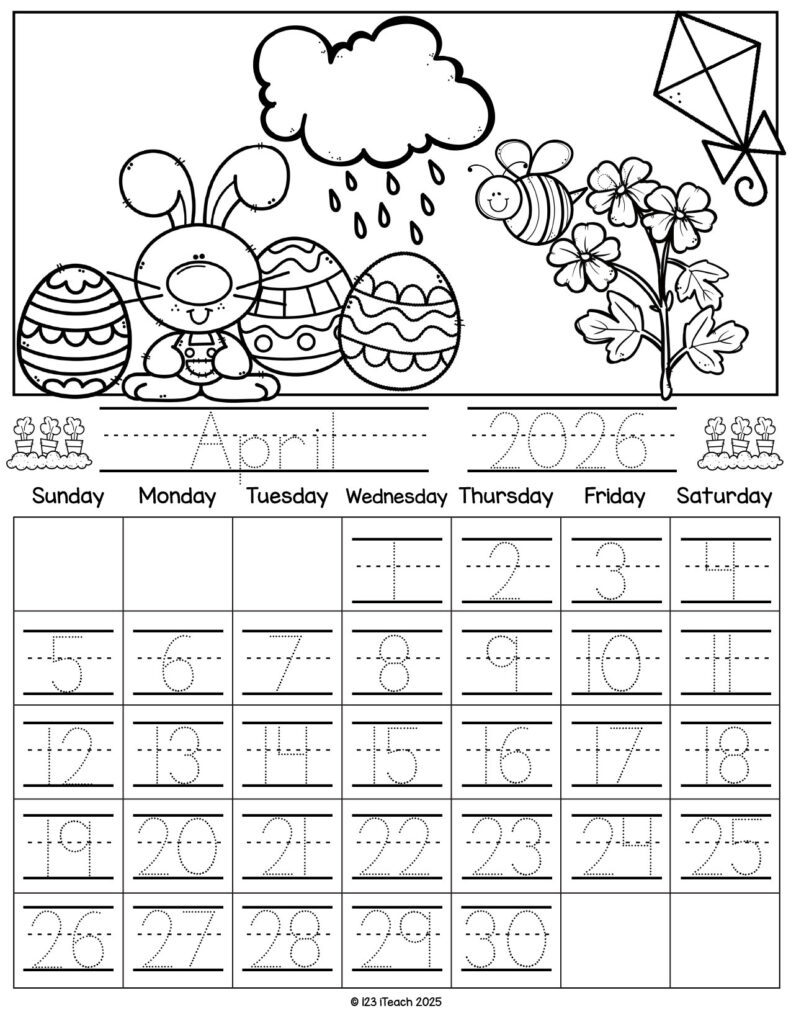
April Trace-the-Date Calendar
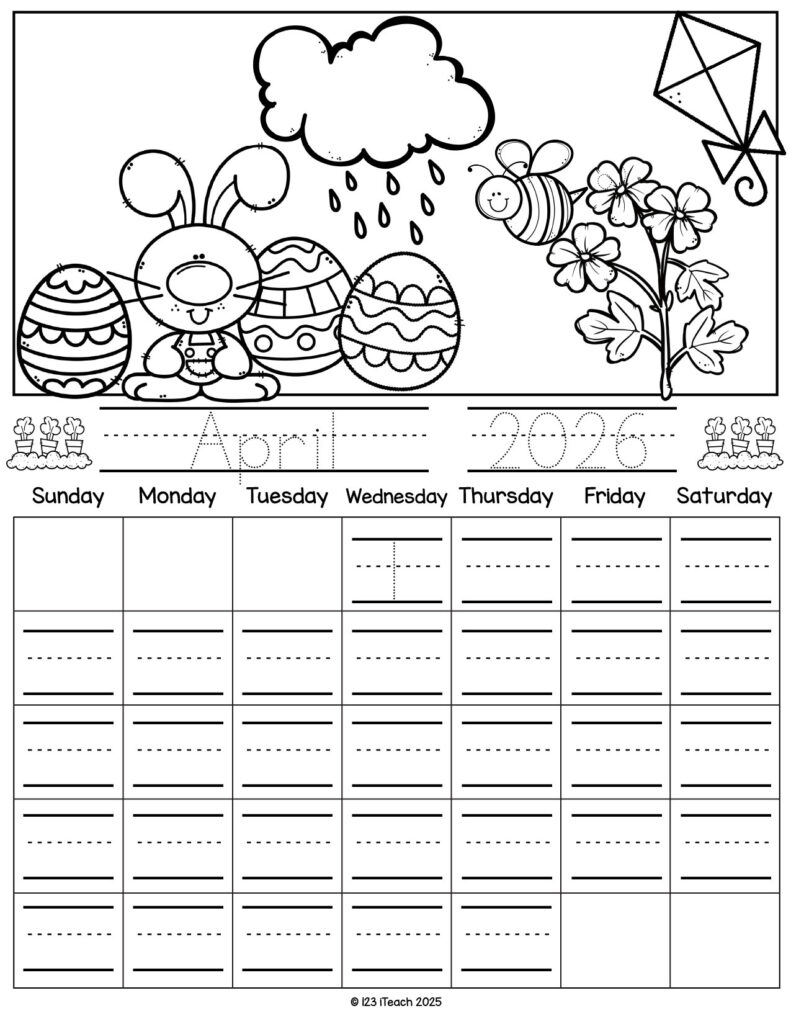
April Fill-in-the-Date Calendar
Why Teachers and Parents Love Date Tracing Pages
Fill in the date pages are popular because they solve real problems.
For teachers:
- No-prep daily routine
- Calm classroom transitions
- Built-in handwriting and math review
For parents:
- Simple structure
- Clear learning purpose
- Easy way to support school skills at home
They feel productive without being overwhelming.
A Simple Tool with Lasting Impact
In early education, the best resources are often the simplest ones. Fill in the date and trace the date calendar pages quietly support literacy, math, fine motor development, and independence—all in one short daily activity.
When used consistently, these pages help children understand their world, organize their thinking, and build confidence as learners.
That’s a powerful return on a single sheet of paper.
GET THE REST OF THE MONTHS IN THE SHOP:
Want even more Pre-K to 1st Grade Resources?
(there are worksheets, coloring pages, Google Slide activities, centers and more!).